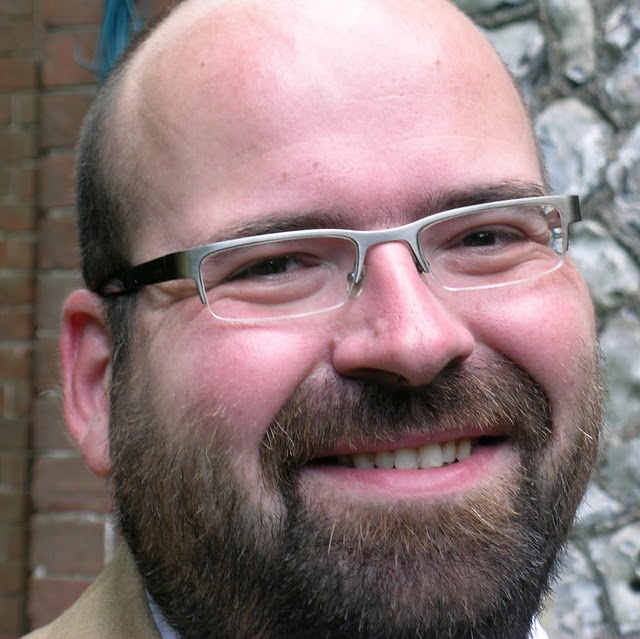
Press release: Erich Kofmel promoted to research professorship
26 February 2010
In accordance with Swiss legislation and the laws of the Republic and Canton of Geneva, Erich Kofmel has been promoted to the position of Research Professor of Political Theory at the Sussex Centre for the Individual and Society (SCIS), with effect from 1 March 2010. Professor Kofmel will remain Managing Director of SCIS, the research centre's Board of Directors announced today.
Founded in 2006 at the University of Sussex, England, SCIS has been an international association under Swiss law, based in Geneva, since 2009.
SCIS is not an accredited higher education institution in Switzerland and does not regularly undertake teaching and the professorship awarded to Erich Kofmel, while a signifier of academic excellence, is a research professorship not a university professorship. As an inter- and transdisciplinary research centre, SCIS is formally independent of university structures.
Professor Kofmel (35) is the world's leading expert on anti-democratic thought and practice. He studied for a doctoral degree in social and political thought at the University of Sussex and Sciences Po Paris and holds Master's degrees in Public and Development Management and Roman Catholic Theology as well as a Postgraduate Certificate in Comparative and Cross-Cultural Research Methods. Prior to taking up an academic career, he worked in project and general management in the private, public, and non-governmental sectors in Europe and Africa. A native of Switzerland, he lived for prolonged periods in Senegal, South Africa, England, and France.
Professor Kofmel is the editor of two contributed volumes, Anti-Liberalism and Political Theology and Anti-Democratic Thought (Imprint Academic, 2008), and the author of two academic blogs, the Anti-Democracy Agenda (www.anti-democracy.com) and the Political Theology Agenda (www.political-theology.com). An edited volume on alternatives to democracy in development policy and a monograph, Me Against Mediocrity, are in preparation.
He is available for consultancy mandates particularly in the fields of anti-democratic thought and practice, political theologies, and the interaction of the individual and society.
SCIS continues to invite applications from suitably qualified candidates worldwide to join the centre as Research Associates or Senior Research Associates or to do internships. We are eager to work with people (in person or through electronic communication channels) who will produce original research at the cutting edge of the study of "the individual and society" in any discipline or area of study.
Website: www.scis-calibrate.org
Contact: e.kofmel@scis-calibrate.org
Sussex Centre for the Individual and Society
1200 Geneva
Switzerland
26 February 2010
15 February 2010
The Art of Not Being Governed: An Anarchist History of Upland Southeast Asia
In August 2009, Yale University Press published James C. Scott's monograph "The Art of Not Being Governed: An Anarchist History of Upland Southeast Asia":
http://yalepress.yale.edu/yupbooks/book.asp?isbn=9780300152289
Publisher's description: "For two thousand years the disparate groups that now reside in Zomia (a mountainous region the size of Europe that consists of portions of seven Asian countries) have fled the projects of the organized state societies that surround them – slavery, conscription, taxes, corvée labor, epidemics, and warfare. This book, essentially an 'anarchist history,' is the first-ever examination of the huge literature on state-making whose author evaluates why people would deliberately and reactively remain stateless. Among the strategies employed by the people of Zomia to remain stateless are physical dispersion in rugged terrain; agricultural practices that enhance mobility; pliable ethnic identities; devotion to prophetic, millenarian leaders; and maintenance of a largely oral culture that allows them to reinvent their histories and genealogies as they move between and around states.
"In accessible language, James Scott, recognized worldwide as an eminent authority in Southeast Asian, peasant, and agrarian studies, tells the story of the peoples of Zomia and their unlikely odyssey in search of self-determination. He redefines our views on Asian politics, history, demographics, and even our fundamental ideas about what constitutes civilization, and challenges us with a radically different approach to history that presents events from the perspective of stateless peoples and redefines state-making as a form of 'internal colonialism.' This new perspective requires a radical reevaluation of the civilizational narratives of the lowland states. Scott's work on Zomia represents a new way to think of area studies that will be applicable to other runaway, fugitive, and marooned communities, be they Gypsies, Cossacks, tribes fleeing slave raiders, Marsh Arabs, or San-Bushmen."
Reviews: "Few scholars possess a keener capacity to recognize the agency of peoples without history and in entirely unexpected places, practices and forms. Indeed, it leads him ever closer to the anarchist ideal that it is possible for humans not only to escape the state, but the very state form itself." (Prasenjit Duara, National University of Singapore)
"A brilliant study rich with humanity and cultural insights, this book will change the way readers think about human history – and about themselves. It is one of the most fascinating and provocative works in social history and political theory I, for one, have ever read." (Robert W. Hefner, Boston University)
"Underscores key, but often overlooked, variables that tell us a great deal about why states rise and expand as well as decline and collapse. There are no books that currently cover these themes in this depth and breadth, with such conceptual clarity, originality, and imagination. Clearly argued and engaging, this is a path-breaking and paradigm-shifting book." (Michael Adas, Rutgers University)
"Finally, a true history of what pressures indigenous peoples face from these bizarre new inventions called nation states. Jim Scott has written a compassionate and complete framework that explains the ways in which states try to crowd out, envelop and regiment non-state peoples. He could take out every reference to Southeast Asia and replace it with the Arctic and it would fit the Inuit experience too. We need real applicable history that works, that fits. Truth like this, it's too darn rare." (Derek Rasmussen, former community activist in the Inuit territory of Nunavut, advisor to Nunavut Tunngavik Inc.)
"Zomia, he says, offers a sort of counter-history of the evolution of human civilization. . . . What Zomia presents, Scott argues ... is nothing less than a refutation of the traditional narrative of steady civilizational progress, in which human life has improved as societies have grown larger and more comples [sic]. Instead, for many people through history, Scott argues, civilized life has been a burden and a menace." (Drake Bennett, "Boston Globe")
"For those who live in states, savages are those who do not. Yet since the Enlightenment, there have always been Western intellectuals who want to find a critical role for the savage to play. The general idea has been to harness the otherness of indigenous or stateless people as a means of interrogating ... the modern state. In the past twenty years or so, this project has dropped off drastically .... Scott has found a creative way to revive the tradition of critical thinking about the savage – and to highlight the social goals of equality and autonomy embodied in the Zomian social order that states routinely fall short of realizing." (Joel Robbins, "Bookforum")
I decided to put up this book announcement here, rather than on the "Anti-Democracy Agenda", because some of the peoples Scott studies employ forms of autonomous/anarchist self-rule that he labels as "democratic". That label is certainly problematic in the context, since it normally is linked to statehood or a (sub)state-like polity. More importantly, though, even those peoples studied that employ more authoritarian forms of self-rule cannot necessarily be assumed to do so in conscious opposition to democracy as a form of political organization – which may never have entered their thinking.
James C. Scott is Sterling Professor of Political Science, Professor of Anthropology, and Co-Director of the Agrarian Studies Program at Yale. He is a Fellow of the American Academy of Arts and Sciences.
http://yalepress.yale.edu/yupbooks/book.asp?isbn=9780300152289
Publisher's description: "For two thousand years the disparate groups that now reside in Zomia (a mountainous region the size of Europe that consists of portions of seven Asian countries) have fled the projects of the organized state societies that surround them – slavery, conscription, taxes, corvée labor, epidemics, and warfare. This book, essentially an 'anarchist history,' is the first-ever examination of the huge literature on state-making whose author evaluates why people would deliberately and reactively remain stateless. Among the strategies employed by the people of Zomia to remain stateless are physical dispersion in rugged terrain; agricultural practices that enhance mobility; pliable ethnic identities; devotion to prophetic, millenarian leaders; and maintenance of a largely oral culture that allows them to reinvent their histories and genealogies as they move between and around states.
"In accessible language, James Scott, recognized worldwide as an eminent authority in Southeast Asian, peasant, and agrarian studies, tells the story of the peoples of Zomia and their unlikely odyssey in search of self-determination. He redefines our views on Asian politics, history, demographics, and even our fundamental ideas about what constitutes civilization, and challenges us with a radically different approach to history that presents events from the perspective of stateless peoples and redefines state-making as a form of 'internal colonialism.' This new perspective requires a radical reevaluation of the civilizational narratives of the lowland states. Scott's work on Zomia represents a new way to think of area studies that will be applicable to other runaway, fugitive, and marooned communities, be they Gypsies, Cossacks, tribes fleeing slave raiders, Marsh Arabs, or San-Bushmen."
Reviews: "Few scholars possess a keener capacity to recognize the agency of peoples without history and in entirely unexpected places, practices and forms. Indeed, it leads him ever closer to the anarchist ideal that it is possible for humans not only to escape the state, but the very state form itself." (Prasenjit Duara, National University of Singapore)
"A brilliant study rich with humanity and cultural insights, this book will change the way readers think about human history – and about themselves. It is one of the most fascinating and provocative works in social history and political theory I, for one, have ever read." (Robert W. Hefner, Boston University)
"Underscores key, but often overlooked, variables that tell us a great deal about why states rise and expand as well as decline and collapse. There are no books that currently cover these themes in this depth and breadth, with such conceptual clarity, originality, and imagination. Clearly argued and engaging, this is a path-breaking and paradigm-shifting book." (Michael Adas, Rutgers University)
"Finally, a true history of what pressures indigenous peoples face from these bizarre new inventions called nation states. Jim Scott has written a compassionate and complete framework that explains the ways in which states try to crowd out, envelop and regiment non-state peoples. He could take out every reference to Southeast Asia and replace it with the Arctic and it would fit the Inuit experience too. We need real applicable history that works, that fits. Truth like this, it's too darn rare." (Derek Rasmussen, former community activist in the Inuit territory of Nunavut, advisor to Nunavut Tunngavik Inc.)
"Zomia, he says, offers a sort of counter-history of the evolution of human civilization. . . . What Zomia presents, Scott argues ... is nothing less than a refutation of the traditional narrative of steady civilizational progress, in which human life has improved as societies have grown larger and more comples [sic]. Instead, for many people through history, Scott argues, civilized life has been a burden and a menace." (Drake Bennett, "Boston Globe")
"For those who live in states, savages are those who do not. Yet since the Enlightenment, there have always been Western intellectuals who want to find a critical role for the savage to play. The general idea has been to harness the otherness of indigenous or stateless people as a means of interrogating ... the modern state. In the past twenty years or so, this project has dropped off drastically .... Scott has found a creative way to revive the tradition of critical thinking about the savage – and to highlight the social goals of equality and autonomy embodied in the Zomian social order that states routinely fall short of realizing." (Joel Robbins, "Bookforum")
I decided to put up this book announcement here, rather than on the "Anti-Democracy Agenda", because some of the peoples Scott studies employ forms of autonomous/anarchist self-rule that he labels as "democratic". That label is certainly problematic in the context, since it normally is linked to statehood or a (sub)state-like polity. More importantly, though, even those peoples studied that employ more authoritarian forms of self-rule cannot necessarily be assumed to do so in conscious opposition to democracy as a form of political organization – which may never have entered their thinking.
James C. Scott is Sterling Professor of Political Science, Professor of Anthropology, and Co-Director of the Agrarian Studies Program at Yale. He is a Fellow of the American Academy of Arts and Sciences.
Labels:
anarchism,
anthropology,
Asia,
book,
civilization,
history,
political science,
statelessness
09 February 2010
Imprint Academic book covers compared
The new book (co-edited with András Körösényi and Gabriella Slomp) by Joseph V. Femia, Professor of Political Theory at the University of Liverpool and a former Senior Research Associate of SCIS, has just been published by Imprint Academic. The book's title is "Political Leadership in Liberal and Democratic Theory".Released on 1 December 2009, precisely a year after my own collection "Anti-Democratic Thought" was published by Imprint Academic, it is interesting to note – and quite likely no one but me would note – that the new book cover shows the exact same picture of an ancient Greek temple that is to be seen on my own book.
One feels compelled to compare.
As good as some of the Imprint Academic cover art may be, the design of the Femia book belongs squarely into the category "awful". While the cover of my own book (to be seen in the left-hand column of this blog) is held in shiny blue, possibly promising a new day and the advent of a non-democratic future, and the temple can symbolize both democratic and anti-democratic political forms that were in existence in ancient Greece, the derivative new cover, held in black and white, plasters Abraham Lincoln and Nelson Mandela across the temple's base and pillars and somehow manages to have Winston Churchill float in the air above the building like a giant balloon.
www.booksonix.com/imprint/bookshop/title.php?9781845401726
Here anyway the publisher's description: "The working hypothesis of this book is that the issue of leadership is neglected by mainstream democratic and liberal theories. This deficiency has especially become evident in the last three or four decades, which have witnessed a revival of deontological liberalism and radical theories of participatory and 'deliberative' democracy. The contributors examine, discuss and evaluate descriptive, analytical and normative arguments regarding the role of leadership in liberal and democratic theory. The volume seeks to provoke debate and to foster new research on the significance and function of leaders in liberal democracies. The book (as a whole and in its constitutive chapters) works on two levels. First, it aims to expose the lack of systematic treatment of leadership in mainstream liberal and democratic theory. Second, it explores the reasons for this neglect. Overall, the book tries to convince the reader that liberal and democratic theories should revive the issue of leadership."
P.S. I'm currently also awaiting Alexandre J.M.E. Christoyannopoulos' monograph "Christian Anarchism: A Political Commentary on the Gospel", which was scheduled for publication by Imprint Academic on 1 January 2010, but does not seem to have been released yet. In 2008, Alex contributed a chapter, "Tolstoy's Anarchist Denunciation of State Violence and Deception", to my "Anti-Democratic Thought":
http://books.google.com/books?printsec=frontcover&id=KkMdJtaaeOYC
01 February 2010
Middle Eastern perceptions of modern American theopolitics
Found a paper that doesn't quite fit the editorial policies of my "Political Theology Agenda" blog, i.e. it hasn't been published yet. I don't include there unpublished papers from online repositories, not least because authors of such papers often don't want that anyone cites from them before they get published in a journal anyway.
However, this one is striking enough to warrant a mention at least here. It's a paper that was given at a Faith and Public Policy Seminar at King's College London on 21 April 2009, titled "America as a Jihad State: Middle Eastern perceptions of modern American theopolitics". The author is Shaikh Abdal-Hakim Murad (aka Timothy Winter; Lecturer of Islamic Studies at Cambridge). We got used to viewing the Middle East, from a western perspective, in terms of "theopolitics". This attempt at turning the tables on us may be fairly unique, though.
The full text is available here:
www.masud.co.uk/ISLAM/ahm/America-as-a-jihad-state.htm
Some excerpts: "Only two weeks ago, in the Sahara desert near Timbuktu, I listened to a wholly traditional Sufi leader expound the view that America's violence towards the Muslim world is the consequence of a sahwa misihiyya, a Christian revival. He was well-aware of the role of the Christian Coalition in the run-up to the Iraq war, despite living in a region where I saw no newspapers, and where internet access is almost impossible. Yet he was familiar with the names of Franklin Graham, Pat Robertson, and other icons of the Christian Right. [...]
"[A]n article by Jaafar Hadi Hassan in [the Lebanese-rooted newspaper] al-Hayat in 2003 [...] summarises the core passages of the [biblical] Book of Revelation which are central to the [apocalyptic]
world-view of the so-called theocons. Much of Revelation, he writes, is ambiguous, but the role of Iraq in the end-time scenario is clear: Iraq, or 'Babylon', will fill the nations with impurity; and an angel of God's wrath will bring it to destruction, and it will be divided into three parts – exactly what America has achieved. [...] The environmental crisis is a positive sign that the present world is coming to an end; and this explains, for Hassan, American indifference towards the Kyoto Protocols. [...]
"While takfiri Salafi formations such as those which self-identify as al-Qaida are content to use generic terms such as 'crusading' to account for American interventions in the Muslim world, and offer simple accounts of the power of the Jewish lobby over Christians paralyzed with guilt over the Holocaust, mainline Islamism can adopt a slightly more analytic view. [...] [W]hereas ten years ago Muslims tended to view America as a secular republic containing many religious Christians, the perception is now gaining ground that America is a specifically Christian entity, whose policies on Israel, and whose otherwise mystifying violence against Muslims, whether in occupied countries or in detention, can most helpfully be explained with reference to the Bible."
However, this one is striking enough to warrant a mention at least here. It's a paper that was given at a Faith and Public Policy Seminar at King's College London on 21 April 2009, titled "America as a Jihad State: Middle Eastern perceptions of modern American theopolitics". The author is Shaikh Abdal-Hakim Murad (aka Timothy Winter; Lecturer of Islamic Studies at Cambridge). We got used to viewing the Middle East, from a western perspective, in terms of "theopolitics". This attempt at turning the tables on us may be fairly unique, though.
The full text is available here:
www.masud.co.uk/ISLAM/ahm/America-as-a-jihad-state.htm
Some excerpts: "Only two weeks ago, in the Sahara desert near Timbuktu, I listened to a wholly traditional Sufi leader expound the view that America's violence towards the Muslim world is the consequence of a sahwa misihiyya, a Christian revival. He was well-aware of the role of the Christian Coalition in the run-up to the Iraq war, despite living in a region where I saw no newspapers, and where internet access is almost impossible. Yet he was familiar with the names of Franklin Graham, Pat Robertson, and other icons of the Christian Right. [...]
"[A]n article by Jaafar Hadi Hassan in [the Lebanese-rooted newspaper] al-Hayat in 2003 [...] summarises the core passages of the [biblical] Book of Revelation which are central to the [apocalyptic]
world-view of the so-called theocons. Much of Revelation, he writes, is ambiguous, but the role of Iraq in the end-time scenario is clear: Iraq, or 'Babylon', will fill the nations with impurity; and an angel of God's wrath will bring it to destruction, and it will be divided into three parts – exactly what America has achieved. [...] The environmental crisis is a positive sign that the present world is coming to an end; and this explains, for Hassan, American indifference towards the Kyoto Protocols. [...]
"While takfiri Salafi formations such as those which self-identify as al-Qaida are content to use generic terms such as 'crusading' to account for American interventions in the Muslim world, and offer simple accounts of the power of the Jewish lobby over Christians paralyzed with guilt over the Holocaust, mainline Islamism can adopt a slightly more analytic view. [...] [W]hereas ten years ago Muslims tended to view America as a secular republic containing many religious Christians, the perception is now gaining ground that America is a specifically Christian entity, whose policies on Israel, and whose otherwise mystifying violence against Muslims, whether in occupied countries or in detention, can most helpfully be explained with reference to the Bible."
24 January 2010
Tribal king declares secession from South Africa
This hasn't received much attention outside of SA:
On 14 January 2010, the king of the tribe Nelson Mandela belongs to served a secession notice on the South African Parliament. Only weeks after being sentenced by a South African court of law to fifteen years in jail for culpable homicide, kidnapping, arson, and assault with intent to do grievous bodily harm (all charges dating back to an event in 1995), the lawyer of King Buyelekhaya Dalindyebo declared that the abaThembu tribe would now form the independent state of Thembuland.
According to media reports, the new state – to be headed by the king who is out on bail – may comprise as much as sixty-five percent of current South Africa, in line with the pre-colonial boundaries of the tribe's land, including all of the Western, Eastern and Northern Cape provinces, KwaZulu-Natal, parts of Gauteng and the Free State, as well as the cities of Johannesburg and Durban. The king's supporters claim abaThembu to be South Africa's largest tribe with more than ten million members.
Dalindyebo – who is better known by his praise name, Zwelibanzi – is one of a handful of rightful monarchs in South Africa and a former operative of the military wing of the African National Congress (ANC), Umkhonto we Sizwe (Spear of the Nation), in Angola. Only the more surprising, then, that his legal team accuses the ANC government of a political trial aimed at replacing Dalindyebo with a puppet king.
South Africa, whose constitution attributes tribal kings a largely ceremonial role, neighbours two constitutional monarchies, Lesotho and Swaziland.
On 14 January 2010, the king of the tribe Nelson Mandela belongs to served a secession notice on the South African Parliament. Only weeks after being sentenced by a South African court of law to fifteen years in jail for culpable homicide, kidnapping, arson, and assault with intent to do grievous bodily harm (all charges dating back to an event in 1995), the lawyer of King Buyelekhaya Dalindyebo declared that the abaThembu tribe would now form the independent state of Thembuland.
According to media reports, the new state – to be headed by the king who is out on bail – may comprise as much as sixty-five percent of current South Africa, in line with the pre-colonial boundaries of the tribe's land, including all of the Western, Eastern and Northern Cape provinces, KwaZulu-Natal, parts of Gauteng and the Free State, as well as the cities of Johannesburg and Durban. The king's supporters claim abaThembu to be South Africa's largest tribe with more than ten million members.
Dalindyebo – who is better known by his praise name, Zwelibanzi – is one of a handful of rightful monarchs in South Africa and a former operative of the military wing of the African National Congress (ANC), Umkhonto we Sizwe (Spear of the Nation), in Angola. Only the more surprising, then, that his legal team accuses the ANC government of a political trial aimed at replacing Dalindyebo with a puppet king.
South Africa, whose constitution attributes tribal kings a largely ceremonial role, neighbours two constitutional monarchies, Lesotho and Swaziland.
Labels:
development studies,
South Africa,
tribal kingdom
13 January 2010
Keeping my stalker busy
I found that one good way of demonstrating to people that I am indeed getting (cyber)stalked is by leaving comments to blog posts.
Wherever I leave a comment – still under my own name, despite all the defamation –, you can be sure that the next comment (unless it gets moderated) is from my stalker, reiterating the same tired old lies.
This has been going on for two years now.
How sick must that person be?
By leaving comments, I can lead him or her around the Internet like a dog on a leash.
Read my previous posts on the cyberstalking campaign against me under this thread:
www.erichkofmel.com/search/label/cyberstalking
Wherever I leave a comment – still under my own name, despite all the defamation –, you can be sure that the next comment (unless it gets moderated) is from my stalker, reiterating the same tired old lies.
This has been going on for two years now.
How sick must that person be?
By leaving comments, I can lead him or her around the Internet like a dog on a leash.
Read my previous posts on the cyberstalking campaign against me under this thread:
www.erichkofmel.com/search/label/cyberstalking
06 January 2010
"Anti-Democracy Agenda" now online
Please circulate widely! Blog about it! etc.
In January 2009, I started this blog – now called "Erich Kofmel Himself" – and a blog on political theology, now called the "Political Theology Agenda".
From the outset both these blogs bore the logo of the Sussex Centre for the Individual and Society (SCIS). The renaming of the blogs at the end of last year was part of an improved online strategy of SCIS, which also includes the addition of a third blog in January 2010.
That new blog is called the "Anti-Democracy Agenda":
www.anti-democracy.com
Description: "Conferences, Books, Articles, Trends: The Anti-Democracy Agenda is run by the Sussex Centre for the Individual and Society (SCIS) in order to serve as a focal point and the premier resource on the net for the study of anti-democratic thought and practice as well as old and new alternatives to democracy. It wishes to facilitate the exchange on anti-democratic thought and practice across boundaries, be they disciplinary, ideological, national, cultural, generational, philosophical, religious (or non-religious), etc. By disseminating information on research, publications, and events, it hopes to increase awareness of the various traditions and current trends, and raise the academic and public profile of anti-democratic thought and practice worldwide."
Already, there are almost thirty posts on the Anti-Democracy Agenda. Namely, those posts on anti-democratic thought made here during 2009 and around twenty new posts introducing in detail scholarly resources (books, articles, and so on) for the study of anti-democratic thought and practice. In future, I may continue to post personal comments on anti-democratic developments here, while posting more objective news on the Anti-Democracy Agenda. (Where I will of course also provide links to posts made here.)
The Political Theology Agenda too seems finally to get properly indexed by Google and now holds top spots for "political theology" searches on Google, Bing, and Yahoo. Throughout 2009, it accrued 75 posts, of which 31 during November and December 2009. I expect the number of posts in 2010 to be significantly higher, in line with the increasing number of people working on issues of political theology/-ies in all conceivable academic disciplines and the scholarly in- and outputs to be expected from this.
Just as I knew last year that the time had come for the Political Theology Agenda – the field had grown enough since 2006 to sustain such a blog –, the number and quality of posts on anti-democratic thought and alternatives to democracy I made here, the new publications and developments to be commented on in 2009 convinced me that the time had come for the Anti-Democracy Agenda. It will be sustained by things to come.
The term "Agenda" indicates the rationale of both blogs (and such further Agendas as SCIS may see fit to start in the future): originating from Latin, it means that "which ought to be done", a working programme – doing, acting, making. A list of matters to be worked on, to be taken up, to be contributed to. Notably, a schedule of events and readings, and a research agenda around which to coalesce.
These Agendas give visibility to novel areas of research, provide a focal point to informal networks of scholars (both at universities and independent) and people all around the world and from various backgrounds that may not know each other now and maybe never get to know one another. They provide resources, all in one place, for the benefit of those who come newly to the field or are just curious. They are an invitation to participate.
The time has come to give that kind of focus to the research agenda on anti-democratic thought and practice.
Feel free to leave a comment or contact me.
In January 2009, I started this blog – now called "Erich Kofmel Himself" – and a blog on political theology, now called the "Political Theology Agenda".
From the outset both these blogs bore the logo of the Sussex Centre for the Individual and Society (SCIS). The renaming of the blogs at the end of last year was part of an improved online strategy of SCIS, which also includes the addition of a third blog in January 2010.
That new blog is called the "Anti-Democracy Agenda":
www.anti-democracy.com
Description: "Conferences, Books, Articles, Trends: The Anti-Democracy Agenda is run by the Sussex Centre for the Individual and Society (SCIS) in order to serve as a focal point and the premier resource on the net for the study of anti-democratic thought and practice as well as old and new alternatives to democracy. It wishes to facilitate the exchange on anti-democratic thought and practice across boundaries, be they disciplinary, ideological, national, cultural, generational, philosophical, religious (or non-religious), etc. By disseminating information on research, publications, and events, it hopes to increase awareness of the various traditions and current trends, and raise the academic and public profile of anti-democratic thought and practice worldwide."
Already, there are almost thirty posts on the Anti-Democracy Agenda. Namely, those posts on anti-democratic thought made here during 2009 and around twenty new posts introducing in detail scholarly resources (books, articles, and so on) for the study of anti-democratic thought and practice. In future, I may continue to post personal comments on anti-democratic developments here, while posting more objective news on the Anti-Democracy Agenda. (Where I will of course also provide links to posts made here.)
The Political Theology Agenda too seems finally to get properly indexed by Google and now holds top spots for "political theology" searches on Google, Bing, and Yahoo. Throughout 2009, it accrued 75 posts, of which 31 during November and December 2009. I expect the number of posts in 2010 to be significantly higher, in line with the increasing number of people working on issues of political theology/-ies in all conceivable academic disciplines and the scholarly in- and outputs to be expected from this.
Just as I knew last year that the time had come for the Political Theology Agenda – the field had grown enough since 2006 to sustain such a blog –, the number and quality of posts on anti-democratic thought and alternatives to democracy I made here, the new publications and developments to be commented on in 2009 convinced me that the time had come for the Anti-Democracy Agenda. It will be sustained by things to come.
The term "Agenda" indicates the rationale of both blogs (and such further Agendas as SCIS may see fit to start in the future): originating from Latin, it means that "which ought to be done", a working programme – doing, acting, making. A list of matters to be worked on, to be taken up, to be contributed to. Notably, a schedule of events and readings, and a research agenda around which to coalesce.
These Agendas give visibility to novel areas of research, provide a focal point to informal networks of scholars (both at universities and independent) and people all around the world and from various backgrounds that may not know each other now and maybe never get to know one another. They provide resources, all in one place, for the benefit of those who come newly to the field or are just curious. They are an invitation to participate.
The time has come to give that kind of focus to the research agenda on anti-democratic thought and practice.
Feel free to leave a comment or contact me.
Labels:
anti-democratic thought,
political theology,
research,
SCIS
30 December 2009
Climate scientists against democracy
One of the arguably most progressive movements of our times – environmentalists fighting global warming and climate change – shows signs of turning anti-democratic in the wake of the perceived failure of the climate summit in Copenhagen.
Before Copenhagen, hardly anyone took notice of anti-democratic thought arising out of environmental science, one of the most fashionable fields of research at this time. Let me highlight some of the recent developments.
Two years ago, Australians David Shearman and Joseph Wayne Smith published a book called "The Climate Change Challenge and the Failure of Democracy" (Praeger, 2007):
www.praeger.com/catalog/C34504.aspx
From the publisher's description: "Climate change threatens the future of civilization, but humanity is impotent in effecting solutions. Even in those nations with a commitment to reduce greenhouse emissions, they continue to rise. This failure mirrors those in many other spheres that deplete the fish of the sea, erode fertile land, destroy native forests, pollute rivers and streams, and utilize the world's natural resources beyond their replacement rate.
"In this provocative book, Shearman and Smith present evidence that the fundamental problem causing environmental destruction – and climate change in particular – is the operation of liberal democracy. Its flaws and contradictions bestow upon government – and its institutions, laws, and the markets and corporations that provide its sustenance – an inability to make decisions that could provide a sustainable society.
"Having argued that democracy has failed humanity, the authors go even further and demonstrate that this failure can easily lead to authoritarianism without our even noticing. Even more provocatively, they assert that there is merit in preparing for this eventuality if we want to survive climate change. They are not suggesting that existing authoritarian regimes are more successful in mitigating greenhouse emissions, for to be successful economically they have adopted the market system with alacrity. Nevertheless, the authors conclude that an authoritarian form of government is necessary, but this will be governance by experts and not by those who seek power.
"There are in existence highly successful authoritarian structures – for example, in medicine and in corporate empires – that are capable of implementing urgent decisions impossible under liberal democracy. Society is verging on a philosophical choice between liberty or life."
It is certainly noteworthy that both authors did not work at universities at the time this book was published – and haven't done so since. After holding faculty positions at Edinburgh and Yale, Shearman now works as a practicing physician. Smith is described as a lawyer, philosopher, and book author. Predictably, just like my own book, "Anti-Democratic Thought" (Imprint Academic, 2008), they received largely negative and even hostile reader reviews, simply for opposing democracy – along the lines of "Superficial Diatribe" and "Genocide, anyone? Sure would cut the ol' carbon footprint if you could just feed all those consumers and wrong-thinkers into the shredders ..."
Few academics showed themselves supportive: "For those wanting to think outside the square on climate change issues, this book is indispensable" (Bob Birrell, Monash); "This is an argument-moving book, a fresh and audacious contribution to the climate change debate" (Otis L. Graham, University of California, Santa Barbara); "If political thinking at its best makes the pressing questions of the day an occasion to revisit cherished fundamentals, then this book qualifies" (Gordon Graham, Princeton Theological Seminary – a fellow Imprint Academic author and critic of democracy).
However, since then a number of climate scientists have adopted positions akin to those advanced by Shearman and Smith. James Hansen, for example, a renowned climate modeller with NASA (and billed as "[t]he scientist who convinced the world to take notice [...] of global warming"), is quoted in the Guardian as saying "that corporate lobbying has undermined democratic attempts to curb carbon pollution. 'The democratic process doesn't quite seem to be working,'" for "money is talking louder than the votes". "In Hansen's view, dealing with climate change allows no room for the compromises that rule the world of elected politics."
90-year-old British scientist James Lovelock (also a former NASA consultant and named one of the world's top-100 global public intellectuals by Prospect magazine in 2005), in "The Vanishing Face of Gaia: A Final Warning" (Allen Lane, 2009), may be appalling his readers, according to Publishers Weekly, with "his contention that democracy may need to be abandoned to appropriately confront the challenge [of climate change]":
www.penguin.co.uk/nf/Book/BookDisplay/0,,9781846141850,00.html?/The_Vanishing_Face_of_Gaia_James_Lovelock
Hansen and Lovelock, too, have gained the freedom to say what they really think about democracy (and its dangers) by not standing in the (sole) employ of a university. While Hansen only holds an adjunct professorship at Columbia, Lovelock, though having been an honorary visiting fellow at an Oxford college since 1994, works independently out of his private laboratory.
Much more in this vein can be found in the fora and on message boards of the environmental science community.
It remains to be seen whether such sentiments uttered more frequently by climate scientists will be able to turn public opinion against democracy, and if the protesters that got themselves beat up and arrested on the streets of Copenhagen will turn away from the anti-authoritarian and decentralized grassroots democracy that is still the preferred mode of operation of most anti- and alter-globalization and environmental activism.
Also, Shearman and Smith are correct to stress that the environmental record of today's authoritarian regimes is by no means better than that of democratic governments. From what we heard last week, it appears that China with her obstruction policy is largely responsible for the apparent failure of the Copenhagen summit – for which the western democracies took the blame. China is not interested in curtailing her economic and industrial growth and the burgeoning capitalism (which, in time, will lead to democratic reforms).
Rule by experts, as proposed by climate scientists, is not a new idea either, though. It is as old as Plato's philosopher kings, H.G. Wells' liberal fascism, communist planning, and the EU bureaucracy. Let's just say, it hasn't worked.
We need new alternatives.
Before Copenhagen, hardly anyone took notice of anti-democratic thought arising out of environmental science, one of the most fashionable fields of research at this time. Let me highlight some of the recent developments.
Two years ago, Australians David Shearman and Joseph Wayne Smith published a book called "The Climate Change Challenge and the Failure of Democracy" (Praeger, 2007):
www.praeger.com/catalog/C34504.aspx
From the publisher's description: "Climate change threatens the future of civilization, but humanity is impotent in effecting solutions. Even in those nations with a commitment to reduce greenhouse emissions, they continue to rise. This failure mirrors those in many other spheres that deplete the fish of the sea, erode fertile land, destroy native forests, pollute rivers and streams, and utilize the world's natural resources beyond their replacement rate.
"In this provocative book, Shearman and Smith present evidence that the fundamental problem causing environmental destruction – and climate change in particular – is the operation of liberal democracy. Its flaws and contradictions bestow upon government – and its institutions, laws, and the markets and corporations that provide its sustenance – an inability to make decisions that could provide a sustainable society.
"Having argued that democracy has failed humanity, the authors go even further and demonstrate that this failure can easily lead to authoritarianism without our even noticing. Even more provocatively, they assert that there is merit in preparing for this eventuality if we want to survive climate change. They are not suggesting that existing authoritarian regimes are more successful in mitigating greenhouse emissions, for to be successful economically they have adopted the market system with alacrity. Nevertheless, the authors conclude that an authoritarian form of government is necessary, but this will be governance by experts and not by those who seek power.
"There are in existence highly successful authoritarian structures – for example, in medicine and in corporate empires – that are capable of implementing urgent decisions impossible under liberal democracy. Society is verging on a philosophical choice between liberty or life."
It is certainly noteworthy that both authors did not work at universities at the time this book was published – and haven't done so since. After holding faculty positions at Edinburgh and Yale, Shearman now works as a practicing physician. Smith is described as a lawyer, philosopher, and book author. Predictably, just like my own book, "Anti-Democratic Thought" (Imprint Academic, 2008), they received largely negative and even hostile reader reviews, simply for opposing democracy – along the lines of "Superficial Diatribe" and "Genocide, anyone? Sure would cut the ol' carbon footprint if you could just feed all those consumers and wrong-thinkers into the shredders ..."
Few academics showed themselves supportive: "For those wanting to think outside the square on climate change issues, this book is indispensable" (Bob Birrell, Monash); "This is an argument-moving book, a fresh and audacious contribution to the climate change debate" (Otis L. Graham, University of California, Santa Barbara); "If political thinking at its best makes the pressing questions of the day an occasion to revisit cherished fundamentals, then this book qualifies" (Gordon Graham, Princeton Theological Seminary – a fellow Imprint Academic author and critic of democracy).
However, since then a number of climate scientists have adopted positions akin to those advanced by Shearman and Smith. James Hansen, for example, a renowned climate modeller with NASA (and billed as "[t]he scientist who convinced the world to take notice [...] of global warming"), is quoted in the Guardian as saying "that corporate lobbying has undermined democratic attempts to curb carbon pollution. 'The democratic process doesn't quite seem to be working,'" for "money is talking louder than the votes". "In Hansen's view, dealing with climate change allows no room for the compromises that rule the world of elected politics."
90-year-old British scientist James Lovelock (also a former NASA consultant and named one of the world's top-100 global public intellectuals by Prospect magazine in 2005), in "The Vanishing Face of Gaia: A Final Warning" (Allen Lane, 2009), may be appalling his readers, according to Publishers Weekly, with "his contention that democracy may need to be abandoned to appropriately confront the challenge [of climate change]":
www.penguin.co.uk/nf/Book/BookDisplay/0,,9781846141850,00.html?/The_Vanishing_Face_of_Gaia_James_Lovelock
Hansen and Lovelock, too, have gained the freedom to say what they really think about democracy (and its dangers) by not standing in the (sole) employ of a university. While Hansen only holds an adjunct professorship at Columbia, Lovelock, though having been an honorary visiting fellow at an Oxford college since 1994, works independently out of his private laboratory.
Much more in this vein can be found in the fora and on message boards of the environmental science community.
It remains to be seen whether such sentiments uttered more frequently by climate scientists will be able to turn public opinion against democracy, and if the protesters that got themselves beat up and arrested on the streets of Copenhagen will turn away from the anti-authoritarian and decentralized grassroots democracy that is still the preferred mode of operation of most anti- and alter-globalization and environmental activism.
Also, Shearman and Smith are correct to stress that the environmental record of today's authoritarian regimes is by no means better than that of democratic governments. From what we heard last week, it appears that China with her obstruction policy is largely responsible for the apparent failure of the Copenhagen summit – for which the western democracies took the blame. China is not interested in curtailing her economic and industrial growth and the burgeoning capitalism (which, in time, will lead to democratic reforms).
Rule by experts, as proposed by climate scientists, is not a new idea either, though. It is as old as Plato's philosopher kings, H.G. Wells' liberal fascism, communist planning, and the EU bureaucracy. Let's just say, it hasn't worked.
We need new alternatives.
21 December 2009
Phillip Blond's "ResPublica" think tank and Radical Orthodoxy
One of the hundreds of people who participated in events organized by the Sussex Centre for the Individual and Society (SCIS) is Phillip Blond.Those living in the UK may by now be familiar with that name. In 2007, when Phillip gave a presentation in the Section "Political Theology as Political Theory" that I organized and chaired at the Fourth General Conference of the European Consortium for Political Research (ECPR), he was but a lowly Senior Lecturer in theology and philosophy at what had only just become the University of Cumbria.
Phillip also participated in the Second Annual International Symposium of SCIS on "The Resurgence of Political Theology". Both events took place in September 2007 in Pisa, Italy.
Then, Phillip worried about how he was going to continue paying his mortgage on a meagre academic salary and he and his frequent collaborator and journalistic co-author, Adrian Pabst, talked about starting an online newspaper. This year, Phillip has been hailed as Tory leader (and possible prime minister come May 2010) David Cameron's "philosopher king", and been able to raise 1.5 million pounds to launch his own think tank, called (rather unimaginatively) "ResPublica":
www.respublica.org.uk
ResPublica was launched on 26 November in the presence of Cameron, but the financial backers behind it remain anonymous. It stands to reason, though, that they are in support of the ideas associated with what Phillip calls "Red Toryism". Already in Pisa, if memory serves correctly, he carried notes toward the manuscript of a book on this subject in his bag, but only in February 2009 he published an article outlining his ideas in the magazine "Prospect".
The book, "Red Tory", will not be published until April 2010 – and I should not be surprised if it won't be published at all before the UK general elections likely to take place in May 2010. (After all, Phillip's only previous monograph, "Eyes of Faith", was scheduled for publication in 2006 and has still not been released.)
Faber and Faber, who are to publish "Red Tory", have meanwhile issued a book description: "Conventional politics is at crossroads. Amid recession, depression, poverty, increasing violence and rising inequality, our current politics is exhausted and inadequate.
"In 'Red Tory', Phillip Blond argues that only a radical new political settlement can tackle the problems we face. Red Toryism combines economic egalitarianism with social conservatism, calling for an end to the monopolisation of society and the private sphere by the state and the market. Decrying the legacy of both the Labour and Conservative parties, Blond proposes a genuinely progressive Conservatism that will restore social equality and revive British culture. He calls for the strengthening of local communities and economies, ending dispossession, redistribution of the tax burden and restoration [of] the nuclear family.
"'Red Tory' offers a different vision for our future and asks us to question our long-held political assumptions. No political thinker has aroused more passionate debate in recent times. Phillip Blond's ideas have already been praised or attacked in every major British newspaper and journal. Challenging, stimulating and exhilarating, this is a book for our times."
There is a lot of hype. And that alone should give reason to be wary. As an academic, in Pisa, I found Phillip both unimpressive and unprepared. In fact, I am still waiting to receive the full text of the paper he was accepted to be giving and which I should have got prior to the conference. Phillip turned up with nothing but notes and extrapolated from those. Of the two, I always found Adrian Pabst, also a participant in Pisa (and in 2008 in a panel on "Comparative Political Theology" I organized at the Second Global International Studies Conference in Ljubljana, Slovenia), intellectually sounder and more stimulating.
Of course, David Cameron, on becoming leader of the Tories, had as little to offer in terms of his CV as Phillip has now. It all seems to be more about connections and being at the right place at the right moment with the right set of vague ideas and attitudes. Does anyone know what Cameron stands for after having been Tory leader for four years? It is hard to believe – though of course entirely in the nature of democracy – that the UK electorate would fall for a David Cameron after having rid themselves of the vacuum that was Tony Blair.
"Red Toryism" may be in 2010 what "New Labour" was in the late 1990s. Red Toryism is an ideology that came to bloom in the financial crisis, when all former boundaries between left and right, economy and state became finally blurred, and it was helped by the blurring that economy-friendly New Labour had done earlier. In fact, Red Toryism is not imaginable without New Labour preceding it.
Both Adrian Pabst (University of Nottingham) and Phillip Blond, along with Graham Ward (University of Manchester), represented the Anglican Radical Orthodoxy movement in Pisa. Radical Orthodoxy set out, hardly ten years ago, from Cambridge's Peterhouse College to renew the Church of England. Already the current Archbishop of Canterbury, and head of the Anglican community, Rowan Williams, is said to be an adherent of Radical Orthodoxy. And now the movement has gained influence over Tory policy and the likely next prime minister.
Of course, the ResPublica website does not openly refer to Radical Orthodoxy, and Phillip is not saying much about it in his interviews. The only clear reference to it is that John Milbank (University of Nottingham), "founder of the Radical Orthodoxy Movement" and Phillip's PhD supervisor (and himself a student of Williams), is listed as a Fellow of ResPublica. Radical-orthodox political theology has a chance to become for the UK what black liberation theology arguably has become under Barack Obama in the US.
One reason why the influence of Radical Orthodoxy on Red Toryism may be downplayed is the confusion of religious identity that embroils Radical Orthodoxy. While Phillip converted as an adult from Roman Catholicism to Anglicanism, one gets the impression that the Radical Orthodox consider themselves to be Catholics within the Church of England (in the "High Church" or "Anglo-Catholic" tradition). They are the very people, it would seem, the Vatican now wants to attract into its fold by offering them a separate structure within the Roman Catholic Church. Radical Orthodoxy, however, rather aims at "taking over" the Church of England. Either way, such Catholic sympathies remain suspicious in the UK, as Tony Blair demonstrated when converting to Catholicism only after having left public office.
Papers not written, books not published ... Philipp continues to work from notes. While there are many introductions to Radical Orthodoxy, all anyone knows about Red Toryism is still schematic, a fragment. It may remain so until after the UK general elections, and afterwards Phillip may be too busy to actually write the book. On the other hand, his think tank now provides him with people who may well write it for him. Very little about Tory policy is worked out and now Cameron got Phillip to work it out for him. Very little about Red Toryism is worked out and now Phillip got others to work it out for him ...
May we hope that the book (maybe helped by others) will clarify at least some of the confusion ResPublica and Phillip's writings still show? For instance, is he now against capitalism, or for capitalism – as his "mutualism" concept seems to be an extension of capitalism to the public sector (much as "New Public Management" extended New Labour's economy-friendliness to the public sector with public-private partnerships, etc.): as I understand it, public sector employees are to get shares in mutually-owned public service-providing companies, giving employees more control. But will that not mean that managers of such entities will be under less control from above and from the public?
Phillip's stepbrother is the current incarnation of James Bond, the actor Daniel Craig – already in Her Majesty's (Secret) Service. As Phillip may turn out to be soon.
Or then, his fall may be as quick as his unlikely rise.
Labels:
book,
political theology,
Radical Orthodoxy,
SCIS,
United Kingdom
19 December 2009
Tadzio Müller arrested at climate summit protests
Being a "global warming sceptic" myself, I didn't plan on writing about the climate summit in Copenhagen. One more futile exercise owed to the hubris of man who basks in the sham glory of being the only species able to "destroy Earth". Really, though, it is only mankind and/or our way of life that we might be destroying. And would that be all bad?
It is not in our hands to destroy Earth. Unlike us, Earth has been around for billions of years, and – albeit changing incessantly – existed through warmer and colder periods much the same. That's one of the things Alex Higgins and I didn't see eye to eye on when founding the Sussex Centre for the Individual and Society (SCIS) back in 2006.
Enough is being said about this. No point in adding to it.
However, I just learned that in Copenhagen again someone associated with SCIS has been arrested – and remains imprisoned – for his political stance.
Among the many graduate students and doctoral candidates at the fringes of SCIS when it was founded at the University of Sussex, and a repeat guest in the original centre when it was still on campus, was one Tadzio Müller, a German alter-globalization activist who did his DPhil in International Relations at Sussex.
Obviously, with his left-leaning ideas, he fitted the Sussex profile much better than I ever did. That didn't save him from being arrested, though.
As the media and various blogs report, Tadzio – who is now a spokesperson for an organization called Climate Justice Action (CJA) – was selectively arrested on 15 December by plainclothes police officers following a press conference he gave at the summit venue. He stands accused of preparing for violence against the police and incitement to riot.
A charge that seems only the more ludicrous if one has seen the violence with which the Danish police are trying to contain protesters on the streets of Copenhagen, freely employing dogs, batons, and pepper spray (check out videos on Youtube). No chance that they will be held responsible for their actions.
More interestingly even, it has been revealed that Tadzio's arrest was only possible because of covert surveillance measures. The Danish police not only infiltrated protesters' preparatory meetings on a broad scale, but also tapped their mobile phones (calls and SMS), and intercepted the e-mails of known activists.
"People have to break the rules", Tadzio is reported as saying. Protesters should not allow themselves to be stopped by fences or other physical barriers. Or police intimidation, one might add.
Even if one does not believe in the great climate myth, one may be sympathetic with the activists who try to turn the climate debate into a debate against global capitalism. "Climate" merely seems a catchword for many of the protesters in Copenhagen.
It is not in our hands to destroy Earth. Unlike us, Earth has been around for billions of years, and – albeit changing incessantly – existed through warmer and colder periods much the same. That's one of the things Alex Higgins and I didn't see eye to eye on when founding the Sussex Centre for the Individual and Society (SCIS) back in 2006.
Enough is being said about this. No point in adding to it.
However, I just learned that in Copenhagen again someone associated with SCIS has been arrested – and remains imprisoned – for his political stance.
Among the many graduate students and doctoral candidates at the fringes of SCIS when it was founded at the University of Sussex, and a repeat guest in the original centre when it was still on campus, was one Tadzio Müller, a German alter-globalization activist who did his DPhil in International Relations at Sussex.
Obviously, with his left-leaning ideas, he fitted the Sussex profile much better than I ever did. That didn't save him from being arrested, though.
As the media and various blogs report, Tadzio – who is now a spokesperson for an organization called Climate Justice Action (CJA) – was selectively arrested on 15 December by plainclothes police officers following a press conference he gave at the summit venue. He stands accused of preparing for violence against the police and incitement to riot.
A charge that seems only the more ludicrous if one has seen the violence with which the Danish police are trying to contain protesters on the streets of Copenhagen, freely employing dogs, batons, and pepper spray (check out videos on Youtube). No chance that they will be held responsible for their actions.
More interestingly even, it has been revealed that Tadzio's arrest was only possible because of covert surveillance measures. The Danish police not only infiltrated protesters' preparatory meetings on a broad scale, but also tapped their mobile phones (calls and SMS), and intercepted the e-mails of known activists.
"People have to break the rules", Tadzio is reported as saying. Protesters should not allow themselves to be stopped by fences or other physical barriers. Or police intimidation, one might add.
Even if one does not believe in the great climate myth, one may be sympathetic with the activists who try to turn the climate debate into a debate against global capitalism. "Climate" merely seems a catchword for many of the protesters in Copenhagen.
Labels:
climate change,
police state,
powers of arrest,
SCIS,
surveillance
11 December 2009
Book: Hong Kong's informal rooftop communities
A book from China's capitalist and democratic outpost, Hong Kong:
Stefan Canham (photographs) and Rufina Wu (architectural drawings) collaborated on "Portraits from above: Hong Kong's informal rooftop communities" (Peperoni Books, 2009).
http://peperoni-books.de/portraits_from_above0.html
Publisher's description: "Self-built, informal settlements on the roofs of high-rise buildings are an integral part of Hong Kong's urban landscape. The rise of rooftop communities is closely linked to the migration history from Chinese Mainland to Hong Kong. With each of China's tumultuous political movements in the 20th century, like the Great Leap Forward and the Cultural Revolution, there was a corresponding wave of Mainland Chinese migrating to Hong Kong."
From the preface: "The roof is a maze of corridors, narrow passageways between huts built of sheet metal, wood, brick and plastics. There are steps and ladders leading up to a second level of huts. [...] Later, we look down at the building from a higher one across the street. The roof is huge, like a village. There must be thirty or forty households on it. [...] Rooftop structures range from basic shelters for the disadvantaged to intricate multi-storey constructions equipped with the amenities of modern life.
"Text records of the residents' stories, measured drawings of each distinct rooftop structure, and high-resolution images of the domestic interiors of more than twenty households offer an unprecedented insight into the everyday life on Hong Kong's rooftops."
The book is bilingual, German and English.
Stefan Canham (photographs) and Rufina Wu (architectural drawings) collaborated on "Portraits from above: Hong Kong's informal rooftop communities" (Peperoni Books, 2009).
http://peperoni-books.de/portraits_from_above0.html
Publisher's description: "Self-built, informal settlements on the roofs of high-rise buildings are an integral part of Hong Kong's urban landscape. The rise of rooftop communities is closely linked to the migration history from Chinese Mainland to Hong Kong. With each of China's tumultuous political movements in the 20th century, like the Great Leap Forward and the Cultural Revolution, there was a corresponding wave of Mainland Chinese migrating to Hong Kong."
From the preface: "The roof is a maze of corridors, narrow passageways between huts built of sheet metal, wood, brick and plastics. There are steps and ladders leading up to a second level of huts. [...] Later, we look down at the building from a higher one across the street. The roof is huge, like a village. There must be thirty or forty households on it. [...] Rooftop structures range from basic shelters for the disadvantaged to intricate multi-storey constructions equipped with the amenities of modern life.
"Text records of the residents' stories, measured drawings of each distinct rooftop structure, and high-resolution images of the domestic interiors of more than twenty households offer an unprecedented insight into the everyday life on Hong Kong's rooftops."
The book is bilingual, German and English.
Labels:
architecture,
book,
China,
development studies
02 December 2009
Olivier Rubin refutes the merits of democracy in famine protection
For the 30th Anniversary Conference of the Development Studies Association (DSA), taking place in London in November 2008 on the theme of hidden forces in social and economic development – "Development's Invisible Hands" –, I convened a panel "Anti-Democratic Development".
One of the participants in that highly selective panel was Olivier Rubin (a recent PhD graduate and Assistant Professor of Political Science at the University of Copenhagen) who ended up winning the prize awarded by the European Journal of Development Research (EJDR) to the best conference paper for his essay, "The Merits of Democracy in Famine Protection – Fact or Fallacy?" – an ambitious attempt to refute (or at least draw into question) an influential theory of Nobel Prize-winning economist Amartya Sen (Harvard and Cambridge).
Rubin's paper has now been published in the November 2009 issue of EJDR (vol. 21/5: 699-717), as part of a Symposium of articles based on papers given in various panels of the 2008 conference. They treat forces as different as religion and conflict, political institutions, non-governmental action, the securitization of aid, and migration.
While I helped shape Rubin's paper both with extensive feedback after the conference and as peer reviewer for EJDR, I only provided input on fine-tuning an already impressive piece of work and all credit goes to him. That said, I greatly appreciate his public acknowledgement: "I wish to extend my gratitude to Erich Kofmel, Managing Director at the Sussex Centre for the Individual and Society (SCIS), for convening the DSA 2008 Panel on Anti-Democratic Development. This article is highly inspired by his somewhat provocative idea of an anti-democratic bias in much of the Development Studies discipline." Thank you.
The EJDR is now making Rubin's article accessible free of charge until the end of the year:
www.palgrave-journals.com/ejdr/journal/v21/n5/full/ejdr200937a.html
Here's the abstract of the paper: "Amartya Sen's assertion that democratic institutions together with a free press provide effective protection from famine is one of the most cited and broadly accepted contributions in modern famine theory. Through a mix of qualitative and quantitative evidence, this article critically examines whether indeed democracies do provide protection from famine. The qualitative research builds on analyses of democratic political dynamics in famine situations (in Bihar 1966, Malawi 2002 and Niger 2005), whereas the quantitative research looks for cross-country correlations between political systems and famine incidents. The article calls into question the strength of the link between democracy and famine protection. Famines have indeed occurred in electoral democracies where the political dynamics at times were counterproductive in providing protection from famine. The article concludes that to fully grasp the complexities of famine, one should replace monocausal political explanations (such as democracy protects against famine) with general tools for context-specific political analysis."
Rubin finds that, "[r]egrettably, the discipline of Development Studies has often had a tendency of displaying less interest in critically testing assertions about the merits of democratic institutions than it has in exposing the adverse consequences of more authoritarian political structures. [...]
"Pointing to democratic mechanisms with a positive effect on famine protection does not exclude the possibility that others, even more effective, can be identified under authoritarian rule. The argument about the merits of democracy in famine protection has clear roots in cost-effectiveness reasoning (given the assumed superiority of the democratic political system, what are the processes that could account for effective famine protection?) when one really ought to rely on cost-benefit reasoning (under different political rules, which political processes foster the most effective famine protection?).
"From the perspective of short-term famine relief, it is not difficult to present arguments that could favor a more authoritarian political system. Some of the counterproductive mechanisms described [for democracies] (log rolling, vote trading, pork barrel politics, not in my backyard and the political blame game) would be largely absent or assume a different form under authoritarian regimes. [...] It is also possible that authoritarian regimes could manage a much prompter and more extensive mobilization of resources for famine prevention when needed. An elected government might have to engage in compromises and negotiations with other political parties, which might not only slow down the process, but also avert resources to other political purposes through log rolling.
"Theoretically, therefore, the democracy hypothesis is not convincing."
In his article, Rubin refers to a Malawian saying: "Sungadye demokalase, which loosely translated means that you cannot eat democracy."
EJDR is a prestigious and well-regarded publication of the European Association of Development Research and Training Institutes (EADI).
One of the participants in that highly selective panel was Olivier Rubin (a recent PhD graduate and Assistant Professor of Political Science at the University of Copenhagen) who ended up winning the prize awarded by the European Journal of Development Research (EJDR) to the best conference paper for his essay, "The Merits of Democracy in Famine Protection – Fact or Fallacy?" – an ambitious attempt to refute (or at least draw into question) an influential theory of Nobel Prize-winning economist Amartya Sen (Harvard and Cambridge).
Rubin's paper has now been published in the November 2009 issue of EJDR (vol. 21/5: 699-717), as part of a Symposium of articles based on papers given in various panels of the 2008 conference. They treat forces as different as religion and conflict, political institutions, non-governmental action, the securitization of aid, and migration.
While I helped shape Rubin's paper both with extensive feedback after the conference and as peer reviewer for EJDR, I only provided input on fine-tuning an already impressive piece of work and all credit goes to him. That said, I greatly appreciate his public acknowledgement: "I wish to extend my gratitude to Erich Kofmel, Managing Director at the Sussex Centre for the Individual and Society (SCIS), for convening the DSA 2008 Panel on Anti-Democratic Development. This article is highly inspired by his somewhat provocative idea of an anti-democratic bias in much of the Development Studies discipline." Thank you.
The EJDR is now making Rubin's article accessible free of charge until the end of the year:
www.palgrave-journals.com/ejdr/journal/v21/n5/full/ejdr200937a.html
Here's the abstract of the paper: "Amartya Sen's assertion that democratic institutions together with a free press provide effective protection from famine is one of the most cited and broadly accepted contributions in modern famine theory. Through a mix of qualitative and quantitative evidence, this article critically examines whether indeed democracies do provide protection from famine. The qualitative research builds on analyses of democratic political dynamics in famine situations (in Bihar 1966, Malawi 2002 and Niger 2005), whereas the quantitative research looks for cross-country correlations between political systems and famine incidents. The article calls into question the strength of the link between democracy and famine protection. Famines have indeed occurred in electoral democracies where the political dynamics at times were counterproductive in providing protection from famine. The article concludes that to fully grasp the complexities of famine, one should replace monocausal political explanations (such as democracy protects against famine) with general tools for context-specific political analysis."
Rubin finds that, "[r]egrettably, the discipline of Development Studies has often had a tendency of displaying less interest in critically testing assertions about the merits of democratic institutions than it has in exposing the adverse consequences of more authoritarian political structures. [...]
"Pointing to democratic mechanisms with a positive effect on famine protection does not exclude the possibility that others, even more effective, can be identified under authoritarian rule. The argument about the merits of democracy in famine protection has clear roots in cost-effectiveness reasoning (given the assumed superiority of the democratic political system, what are the processes that could account for effective famine protection?) when one really ought to rely on cost-benefit reasoning (under different political rules, which political processes foster the most effective famine protection?).
"From the perspective of short-term famine relief, it is not difficult to present arguments that could favor a more authoritarian political system. Some of the counterproductive mechanisms described [for democracies] (log rolling, vote trading, pork barrel politics, not in my backyard and the political blame game) would be largely absent or assume a different form under authoritarian regimes. [...] It is also possible that authoritarian regimes could manage a much prompter and more extensive mobilization of resources for famine prevention when needed. An elected government might have to engage in compromises and negotiations with other political parties, which might not only slow down the process, but also avert resources to other political purposes through log rolling.
"Theoretically, therefore, the democracy hypothesis is not convincing."
In his article, Rubin refers to a Malawian saying: "Sungadye demokalase, which loosely translated means that you cannot eat democracy."
EJDR is a prestigious and well-regarded publication of the European Association of Development Research and Training Institutes (EADI).
24 November 2009
Political Theology Agenda items (Aug-Nov 09)
The indexing hiccups on Google continue. Hence, once more a selection of items announced (between August and now) on my Political Theology Agenda blog:
Habermas on political theology (audio)
The audio of Jürgen Habermas' paper "'The Political' – The Rational Sense of a Questionable Inheritance of Political Theology" (given at NYU on 22 October 2009) is available online.
www.political-theology.com/2009/11/habermas-on-political-theology-audio.html
Islamic liberation theology author and "Radicals" amongst most influential Muslims
A book about the world's most influential Muslims lists South African Farid Esack ("Qur'an, Liberation and Pluralism", 1997) and adherents of fundamentalist Islamic political theology.
www.political-theology.com/2009/11/islamic-liberation-theology-author-and.html
CONF: Political Theology, Pastoral Politics and Leadership
Bilingual (English/French) Conference of the Christian organization African Operation (OPERAF), in Pretoria, South Africa, 1-15 October 2010
www.political-theology.com/2009/11/conf-political-theology-pastoral.html
Recent books on German "new political theology"
www.political-theology.com/2009/11/recent-books-on-german-new-political.html
Journal "Letter & Spirit" on political theology
Volume Five of the journal is concerned with "Liturgy and Empire: Faith in Exile and Political Theology".
www.political-theology.com/2009/11/journal-letter-spirit-on-political.html
Book: "Transforming Atonement: A Political Theology of the Cross"
By Theodore W. Jennings, Jr. (Chicago Theological Seminary), Fortress Press, April 2009
www.political-theology.com/2009/11/book-transforming-atonement-political.html
Book: "God and Government"
A book published as part of a two-year project on political theology run by the Kirby Lang Institute for Christian Ethics (KLICE) and the public theology think tank Theos.
www.political-theology.com/2009/11/kirby-lang-institute-for-christian.html
CONF: Rawlsian Liberalism in Context(s)
Symposium at the University of Tennessee, 26-27 February 2010
www.political-theology.com/2009/11/conf-rawlsian-liberalism-in-contexts.html
CFP: Mysticism and Politics
A seminar section at the 56th annual convention of the College Theology Society (CTS), at the University of Portland, 3-6 June 2010
www.political-theology.com/2009/11/cfp-mysticism-and-politics.html
CFP: Culture Wars in the United States
Conference at the University of Québec at Montreal, 14 October 2010
www.political-theology.com/2009/11/cfp-culture-wars-in-united-states.html
Book: "Political Theologies in the Holy Land"
By David Ohana (Ben-Gurion University of the Negev), Routledge, October 2009
www.political-theology.com/2009/10/book-political-theologies-in-holy-land.html
CFP: Journal "Res Publica" invites contributions on political theology
A journal published by the Universidad de Murcia in Spain
www.political-theology.com/2009/10/cfp-journal-res-publica-invites.html
CFP: The Politics of Peace
2010 biennial conference of the Society for Continental Philosophy and Theology (SCPT), Messiah College, Grantham, Pennsylvania, USA,
16-17 April 2010
www.political-theology.com/2009/10/cfp-politics-of-peace.html
Book: New Carl Schmitt biography in German
By Reinhard Mehring (Humboldt University of Berlin), C.H. Beck, September 2009
www.political-theology.com/2009/10/book-new-carl-schmitt-biography-in.html
Journal "Political Theology" increases frequency
The journal will in 2010 increase its pagination and frequency to 6 issues per volume.
www.political-theology.com/2009/10/journal-political-theology-increases.html
Book: "Religious Anarchism: New Perspectives"
Edited by Alexandre J.M.E. Christoyannopoulos (University of Kent and Canterbury Christ Church University), Cambridge Scholars Publishing, August 2009
www.political-theology.com/2009/10/book-religious-anarchism-new.html
CONF: Association for Jewish Studies 2009 annual conference
Political theology panels at the 41st Annual Conference of AJS, Hyatt Regency Century Plaza Hotel, Los Angeles, 20-22 December 2009
www.political-theology.com/2009/09/conf-association-for-jewish-studies.html
Journal "Telos" on "Political Theologies"
Fall 2009 issue
www.political-theology.com/2009/09/journal-telos-on-political-theologies.html
Journal "Konturen" on political theology
The first issue (volume 1) of the new interdisciplinary journal is dedicated to "Political Theology: the Border in Question".
www.political-theology.com/2009/08/journal-konturen-on-political-theology.html
Please circulate these announcements widely, blog about them, and link to my own blog, the Political Theology Agenda:
www.political-theology.com
Thanks.
Habermas on political theology (audio)
The audio of Jürgen Habermas' paper "'The Political' – The Rational Sense of a Questionable Inheritance of Political Theology" (given at NYU on 22 October 2009) is available online.
www.political-theology.com/2009/11/habermas-on-political-theology-audio.html
Islamic liberation theology author and "Radicals" amongst most influential Muslims
A book about the world's most influential Muslims lists South African Farid Esack ("Qur'an, Liberation and Pluralism", 1997) and adherents of fundamentalist Islamic political theology.
www.political-theology.com/2009/11/islamic-liberation-theology-author-and.html
CONF: Political Theology, Pastoral Politics and Leadership
Bilingual (English/French) Conference of the Christian organization African Operation (OPERAF), in Pretoria, South Africa, 1-15 October 2010
www.political-theology.com/2009/11/conf-political-theology-pastoral.html
Recent books on German "new political theology"
www.political-theology.com/2009/11/recent-books-on-german-new-political.html
Journal "Letter & Spirit" on political theology
Volume Five of the journal is concerned with "Liturgy and Empire: Faith in Exile and Political Theology".
www.political-theology.com/2009/11/journal-letter-spirit-on-political.html
Book: "Transforming Atonement: A Political Theology of the Cross"
By Theodore W. Jennings, Jr. (Chicago Theological Seminary), Fortress Press, April 2009
www.political-theology.com/2009/11/book-transforming-atonement-political.html
Book: "God and Government"
A book published as part of a two-year project on political theology run by the Kirby Lang Institute for Christian Ethics (KLICE) and the public theology think tank Theos.
www.political-theology.com/2009/11/kirby-lang-institute-for-christian.html
CONF: Rawlsian Liberalism in Context(s)
Symposium at the University of Tennessee, 26-27 February 2010
www.political-theology.com/2009/11/conf-rawlsian-liberalism-in-contexts.html
CFP: Mysticism and Politics
A seminar section at the 56th annual convention of the College Theology Society (CTS), at the University of Portland, 3-6 June 2010
www.political-theology.com/2009/11/cfp-mysticism-and-politics.html
CFP: Culture Wars in the United States
Conference at the University of Québec at Montreal, 14 October 2010
www.political-theology.com/2009/11/cfp-culture-wars-in-united-states.html
Book: "Political Theologies in the Holy Land"
By David Ohana (Ben-Gurion University of the Negev), Routledge, October 2009
www.political-theology.com/2009/10/book-political-theologies-in-holy-land.html
CFP: Journal "Res Publica" invites contributions on political theology
A journal published by the Universidad de Murcia in Spain
www.political-theology.com/2009/10/cfp-journal-res-publica-invites.html
CFP: The Politics of Peace
2010 biennial conference of the Society for Continental Philosophy and Theology (SCPT), Messiah College, Grantham, Pennsylvania, USA,
16-17 April 2010
www.political-theology.com/2009/10/cfp-politics-of-peace.html
Book: New Carl Schmitt biography in German
By Reinhard Mehring (Humboldt University of Berlin), C.H. Beck, September 2009
www.political-theology.com/2009/10/book-new-carl-schmitt-biography-in.html
Journal "Political Theology" increases frequency
The journal will in 2010 increase its pagination and frequency to 6 issues per volume.
www.political-theology.com/2009/10/journal-political-theology-increases.html
Book: "Religious Anarchism: New Perspectives"
Edited by Alexandre J.M.E. Christoyannopoulos (University of Kent and Canterbury Christ Church University), Cambridge Scholars Publishing, August 2009
www.political-theology.com/2009/10/book-religious-anarchism-new.html
CONF: Association for Jewish Studies 2009 annual conference
Political theology panels at the 41st Annual Conference of AJS, Hyatt Regency Century Plaza Hotel, Los Angeles, 20-22 December 2009
www.political-theology.com/2009/09/conf-association-for-jewish-studies.html
Journal "Telos" on "Political Theologies"
Fall 2009 issue
www.political-theology.com/2009/09/journal-telos-on-political-theologies.html
Journal "Konturen" on political theology
The first issue (volume 1) of the new interdisciplinary journal is dedicated to "Political Theology: the Border in Question".
www.political-theology.com/2009/08/journal-konturen-on-political-theology.html
Please circulate these announcements widely, blog about them, and link to my own blog, the Political Theology Agenda:
www.political-theology.com
Thanks.
17 November 2009
Sex and the army (in Israel)
We have heard much about Abu Ghraib prison and the photos of a sexual nature soldiers took of its inmates.
I found it interesting to come across a series of photographs that in certain respects resemble those infamous ones. They appear, however, to have been taken voluntarily and they depict Israeli soldiers in the nude:
http://video2.xtube.com/watch_video.php?v_user_id=playb&idx=5&v=u711Z-C425-&cl=IJdXG-C425-&from=&ver=3&ccaa=1&qid=&qidx=&qnum=&preview_flag
Whether these photos are truly pornographic is arguable. They certainly have been compiled for and posted on a gay porn site. This may be one of the rare cases in which porn still sparks a political discussion (see comments section on the page).
While some people claim the pictures to be fake, they look real enough to me (on most shots I find it impossible to spot whether the guys are circumcised or not, which seems to be the point of contention). There are Hebrew letters on the vehicles, an Israeli flag, and Hebrew inscriptions on some men's asses.
The apparent racial mix of at least two of the pictures may have led some commentators to assume that they must have been taken in Europe. However, Sephardi and Mizrahi Jews did emigrate to Israel from North Africa and are of darker skin, and even the presence of a young black guy may rather confirm authenticity – African Jews belonging to the Beta Israel community (Falashas) in Ethiopia, which claims descent from King Solomon and the legendary Queen of Sheba, came to Israel during periods of civil war and famine in the 1980s and 90s and by now number around 120,000 in their new country.
On the story of the Falashas, see also the remarkable French film of 2005 "Va, vis et deviens" (English title: "Live and Become") about an Ethiopian boy who is passed off by his impoverished Christian mother and her Jewish friend as the latter's son so he can get to grow up and live in Israel. Soon after their arrival, his Falasha care mother dies and he is adopted by a white Jewish family. He struggles to keep his secret. He serves in the army. Twenty years later he is reunited with his birth mother when working as a doctor in a refugee camp in Africa.
The film won the Cesar (French Oscar) for Best Screenplay, as well as the Audience Award and the European Cinema Award at the Berlin Film Festival, the Audience Award at the Vancouver International Film Festival, the Golden Swan (Best Film) at the Copenhagen International Film Festival, the Jury Prize (Best Film) and the Audience Award at the Valenciennes Film Festival, and many more prizes.
Just as a Christian Ethiopian may fight hard to resemble a Falasha to escape poverty, and sexually liberated soldiers may photograph Muslim prisoners in positions akin to those that they photograph themselves in for a laugh, very little is as clear cut as we are (mis)led to believe.
I found it interesting to come across a series of photographs that in certain respects resemble those infamous ones. They appear, however, to have been taken voluntarily and they depict Israeli soldiers in the nude:
http://video2.xtube.com/watch_video.php?v_user_id=playb&idx=5&v=u711Z-C425-&cl=IJdXG-C425-&from=&ver=3&ccaa=1&qid=&qidx=&qnum=&preview_flag
Whether these photos are truly pornographic is arguable. They certainly have been compiled for and posted on a gay porn site. This may be one of the rare cases in which porn still sparks a political discussion (see comments section on the page).
While some people claim the pictures to be fake, they look real enough to me (on most shots I find it impossible to spot whether the guys are circumcised or not, which seems to be the point of contention). There are Hebrew letters on the vehicles, an Israeli flag, and Hebrew inscriptions on some men's asses.
The apparent racial mix of at least two of the pictures may have led some commentators to assume that they must have been taken in Europe. However, Sephardi and Mizrahi Jews did emigrate to Israel from North Africa and are of darker skin, and even the presence of a young black guy may rather confirm authenticity – African Jews belonging to the Beta Israel community (Falashas) in Ethiopia, which claims descent from King Solomon and the legendary Queen of Sheba, came to Israel during periods of civil war and famine in the 1980s and 90s and by now number around 120,000 in their new country.
On the story of the Falashas, see also the remarkable French film of 2005 "Va, vis et deviens" (English title: "Live and Become") about an Ethiopian boy who is passed off by his impoverished Christian mother and her Jewish friend as the latter's son so he can get to grow up and live in Israel. Soon after their arrival, his Falasha care mother dies and he is adopted by a white Jewish family. He struggles to keep his secret. He serves in the army. Twenty years later he is reunited with his birth mother when working as a doctor in a refugee camp in Africa.
The film won the Cesar (French Oscar) for Best Screenplay, as well as the Audience Award and the European Cinema Award at the Berlin Film Festival, the Audience Award at the Vancouver International Film Festival, the Golden Swan (Best Film) at the Copenhagen International Film Festival, the Jury Prize (Best Film) and the Audience Award at the Valenciennes Film Festival, and many more prizes.
Just as a Christian Ethiopian may fight hard to resemble a Falasha to escape poverty, and sexually liberated soldiers may photograph Muslim prisoners in positions akin to those that they photograph themselves in for a laugh, very little is as clear cut as we are (mis)led to believe.
04 November 2009
"Political theology" equals terrorism?
Point of interest: We are all terrorists.
The keyword "political theology" now triggers the following paid-for Google Ad (at least on Google's UK site):
Report terrorism
Independent charity, not the police
Report terrorism anonymously
www.Crimestoppers-uk.org
Should anyone reading this be engaged in terrorist actitivies (rather than search "political theology" on Google for religious or academic and research purposes), please denounce yourself.
Cheers,
Erich Kofmel
Editor, "Anti-Liberalism and Political Theology" (forthcoming)
www.political-theology.com
(Update: As of 6 November, the above ad does not seem to show up on Google anymore.)
The keyword "political theology" now triggers the following paid-for Google Ad (at least on Google's UK site):
Report terrorism
Independent charity, not the police
Report terrorism anonymously
www.Crimestoppers-uk.org
Should anyone reading this be engaged in terrorist actitivies (rather than search "political theology" on Google for religious or academic and research purposes), please denounce yourself.
Cheers,
Erich Kofmel
Editor, "Anti-Liberalism and Political Theology" (forthcoming)
www.political-theology.com
(Update: As of 6 November, the above ad does not seem to show up on Google anymore.)
Labels:
Google,
police state,
political theology,
surveillance,
terrorism,
United Kingdom
28 October 2009
Experimental "competitive government" instead of democracy
Until recently, the term "competitive government" has been used to refer to competing policies with regard to democratic institutional arrangements and to the (neo-liberal) introduction of (market-)competitive elements to public administration, such as the privatization and outsourcing of public services (provision of water and electricity, waste disposal, public transportation, health care, etc.), public-private partnerships, and so on.
The term now is about to receive a new meaning thanks to the work of Patri Friedman and others. For them, "competitive government" describes the competition between the political arrangements of entire (future) nation states, be they democratic or otherwise. It is about the freedom of people to decide themselves in what political system they prefer to live and the freedom for every individual to move to a "nation" state/country of his or her choosing. It is about diversity in the forms of government worldwide rather than the uniformity of international "democracy promotion".
For a number of reasons the term "competitive government" may not be ideal, though, for what Friedman and others envisage. After all, unlike today there would be no real competition between such (new) nation states/countries. (Traditionally, competition between national governments and nations too often ends in war.) It's not about dominance, but rather about co-existence and tolerance for other, alternative, diverse forms of government, even "niche" government (political systems that only a minority of people would volunteer to live in). In a competition-theoretical sense, "competitive government" means, however: no monopoly for democracy.
At the same time, the "nation" would have to lose any connotation of blood, ethnicity, and nationalism and come to stand for communities of politically like-minded people instead.
It is safe to say that Friedman is stuck in the terminology of Economics ("competition" rather than accommodation or tolerance, "nation" as the basic entity of political-economic discourse – western democracy promotion suffers from the same competitive misapprehension, inherent in its linkage to capitalist market philosophy and mechanisms).
In Patri Friedman's case this is owed to his family heritage and background. His grandfather, Milton Friedman, 1976 Nobel Prize laureate in Economics, was one of the professors who turned the University of Chicago into a centre of so-called neo-liberal thought. The author of books such as "Capitalism and Freedom" (1962), Milton Friedman was a stout defender of the view that capitalism and democracy are inextricably linked.
Albeit deeply critical of the (welfare) state and pleading for a government that refrains from interventions in the economy, limits its activities to the bare minimum, and leaves the individual as much as possible alone, he still charged the state with the promotion of competition and the provision of a legal and monetary framework for individual and corporate action, primarily in the market place.
Political power should be dispersed as widely as possible, though, so as to avoid coercion of the individual by his fellow men. Dismissing "welfare" and "equality" as the "catchwords" of paternalistic politics against which classical liberalism fought, Milton Friedman held democracy to be merely a means guaranteeing individual freedom.
Now his grandson, Patri Friedman, declares his opposition to democracy.
Taking his clues from his grandfather and father (David D. Friedman) as much as from the libertarian and anarcho-capitalist traditions, Patri Friedman goes further when claiming – on the most elaborate of his many fragmentary websites and blogs – that he is "deeply dissatisfied with current forms of social organization (western democracy)".
http://patrifriedman.com/aboutme/politics.html
He finds "[s]ocial organization (aka government) [...] is being done really badly right now (democracy is better than previous forms, but still awful), and it can be done better. [...] I think most political discussion is [...] nonsensical reasoning about a useless tradition which has accumulated concentrated interests who benefit from it and have entrenched themselves [...]. By stepping up a level, we neatly avoid getting trapped in endless policy debates, debates which are almost pure intellectual masturbation because the problem is not figuring out a good policy, the problem is that the system (say, democracy) doesn't optimize for 'good'. We can argue for hours about the best tax system – but politicians don't want 'the best', they want one where they can profit by selling loopholes."
The solution Patri Friedman proposes is "competitive government" – and the creation of new spaces in which various forms of government and institutional arrangements (some of them non- or anti-democratic) can develop in their own "nation" states/countries. While people (unless they live in some form of democracy) may no longer get to elect their leaders, they would get to decide under what system of government they wish to live – and move there.
Friedman writes: "My path is not just a path to libertarianism, but to a wider variety of governments and societies. I wish to convince non-libertarians that this is an attractive vision, and that it is something they would like to see happen. I also want to help people of many different political persuasions to get along by seeing ways in which each group can have what they want, instead of arguing endlessly over what they should all have."
The way of getting there, according to him, is experimentation: "Government has stagnated. Very little experimentation. (What do you expect when it's basically impossible to start a new country or change an existing one? How do you expect to get technological advances without experimentation?) [...] Experimenting has some important benefits: It gives us empirical evidence about what rule-systems work. This is enormously more valuable than theoretical debates which depend on model assumptions; It enables people to live under a system while learning about it; It gives people a specific, real example to point to when debating the merits of various systems; They let people actually experience a society, physically and emotionally rather than as a mental abstraction. [...]
"The fewer, larger political systems we have, the less experimentation there will be. Also, the less different types of society we will have. I believe that a world with a diverse set of governments, peacefully competing for citizens, would be a much better one. We might see the technologies of social organization advancing as fast as other areas of science and technology."
Patri Friedman recognizes the difficulty of experimenting with political systems in existing nation states/countries. Much like the Zionists at the beginning of the twentieth century, he aims to solve this problem by creating new nations. (One of the blogs he writes on is entitled "Let A Thousand Nations Bloom".) He proposes to "open the new frontier of the oceans", because international waters provide "a very low barrier to entry to creating a new government, and avoid the powers-that-be". " By building cities on the ocean in a modular fashion, the ocean becomes a permanent frontier, because any dissatisfied group can go to a new, empty patch of ocean, and take their houses and offices with them!. This lets them reset at far lower cost."
"And if we build these cities out of modular platforms, so that people can vote with their house (instead of just their feet), we get a world of unprecendented mobility (ie free association). Together, these have the potential to transform the governing industry from an oligopoly into a competitive market."
Patri Friedman calls this "seasteading". He even founded his own organization, the Seadsteading Institute in Palo Alto, California, whose mission statement reads: "To further the establishment and growth of permanent, autonomous ocean communities, enabling innovation with new political and social systems". It may be the first serious project in the direction of "competitive government" since it received a financial contribution of half a million US dollars from billionaire Peter Thiel, co-founder of PayPal.
www.seasteading.org
Questions remain, of course, like on what basis people are supposed to come together to form a new "nation"/country/community if they do not before have an abstract idea, model, conception of a future society all of them aspire to?
Like anarchist, capitalist libertarians, others too will have to find ways of conceptualizing such non- or anti-democratic societies first, and then put their ideas into practice and to the test in existing or new states, while never ceasing to experiment.
Patri's own libertarian project (which attracted the Silicon Valley start-up funding for his Seasteading Institute) suffers from his erring belief that capitalism can durably be separated from democracy. As his grandfather, Milton, knew full well a capitalist economy will (in the long run) always lead to democratic forms of government – and thus the same old problems.
New forms of government will not be democratic. They will not be capitalist either.
To build a swimming country will always require a lot of money. New non-democratic, non-capitalist societies are therefore unlikely to arise on the high seas. But arise they will.
The term now is about to receive a new meaning thanks to the work of Patri Friedman and others. For them, "competitive government" describes the competition between the political arrangements of entire (future) nation states, be they democratic or otherwise. It is about the freedom of people to decide themselves in what political system they prefer to live and the freedom for every individual to move to a "nation" state/country of his or her choosing. It is about diversity in the forms of government worldwide rather than the uniformity of international "democracy promotion".
For a number of reasons the term "competitive government" may not be ideal, though, for what Friedman and others envisage. After all, unlike today there would be no real competition between such (new) nation states/countries. (Traditionally, competition between national governments and nations too often ends in war.) It's not about dominance, but rather about co-existence and tolerance for other, alternative, diverse forms of government, even "niche" government (political systems that only a minority of people would volunteer to live in). In a competition-theoretical sense, "competitive government" means, however: no monopoly for democracy.
At the same time, the "nation" would have to lose any connotation of blood, ethnicity, and nationalism and come to stand for communities of politically like-minded people instead.
It is safe to say that Friedman is stuck in the terminology of Economics ("competition" rather than accommodation or tolerance, "nation" as the basic entity of political-economic discourse – western democracy promotion suffers from the same competitive misapprehension, inherent in its linkage to capitalist market philosophy and mechanisms).
In Patri Friedman's case this is owed to his family heritage and background. His grandfather, Milton Friedman, 1976 Nobel Prize laureate in Economics, was one of the professors who turned the University of Chicago into a centre of so-called neo-liberal thought. The author of books such as "Capitalism and Freedom" (1962), Milton Friedman was a stout defender of the view that capitalism and democracy are inextricably linked.
Albeit deeply critical of the (welfare) state and pleading for a government that refrains from interventions in the economy, limits its activities to the bare minimum, and leaves the individual as much as possible alone, he still charged the state with the promotion of competition and the provision of a legal and monetary framework for individual and corporate action, primarily in the market place.
Political power should be dispersed as widely as possible, though, so as to avoid coercion of the individual by his fellow men. Dismissing "welfare" and "equality" as the "catchwords" of paternalistic politics against which classical liberalism fought, Milton Friedman held democracy to be merely a means guaranteeing individual freedom.
Now his grandson, Patri Friedman, declares his opposition to democracy.
Taking his clues from his grandfather and father (David D. Friedman) as much as from the libertarian and anarcho-capitalist traditions, Patri Friedman goes further when claiming – on the most elaborate of his many fragmentary websites and blogs – that he is "deeply dissatisfied with current forms of social organization (western democracy)".
http://patrifriedman.com/aboutme/politics.html
He finds "[s]ocial organization (aka government) [...] is being done really badly right now (democracy is better than previous forms, but still awful), and it can be done better. [...] I think most political discussion is [...] nonsensical reasoning about a useless tradition which has accumulated concentrated interests who benefit from it and have entrenched themselves [...]. By stepping up a level, we neatly avoid getting trapped in endless policy debates, debates which are almost pure intellectual masturbation because the problem is not figuring out a good policy, the problem is that the system (say, democracy) doesn't optimize for 'good'. We can argue for hours about the best tax system – but politicians don't want 'the best', they want one where they can profit by selling loopholes."
The solution Patri Friedman proposes is "competitive government" – and the creation of new spaces in which various forms of government and institutional arrangements (some of them non- or anti-democratic) can develop in their own "nation" states/countries. While people (unless they live in some form of democracy) may no longer get to elect their leaders, they would get to decide under what system of government they wish to live – and move there.
Friedman writes: "My path is not just a path to libertarianism, but to a wider variety of governments and societies. I wish to convince non-libertarians that this is an attractive vision, and that it is something they would like to see happen. I also want to help people of many different political persuasions to get along by seeing ways in which each group can have what they want, instead of arguing endlessly over what they should all have."
The way of getting there, according to him, is experimentation: "Government has stagnated. Very little experimentation. (What do you expect when it's basically impossible to start a new country or change an existing one? How do you expect to get technological advances without experimentation?) [...] Experimenting has some important benefits: It gives us empirical evidence about what rule-systems work. This is enormously more valuable than theoretical debates which depend on model assumptions; It enables people to live under a system while learning about it; It gives people a specific, real example to point to when debating the merits of various systems; They let people actually experience a society, physically and emotionally rather than as a mental abstraction. [...]
"The fewer, larger political systems we have, the less experimentation there will be. Also, the less different types of society we will have. I believe that a world with a diverse set of governments, peacefully competing for citizens, would be a much better one. We might see the technologies of social organization advancing as fast as other areas of science and technology."
Patri Friedman recognizes the difficulty of experimenting with political systems in existing nation states/countries. Much like the Zionists at the beginning of the twentieth century, he aims to solve this problem by creating new nations. (One of the blogs he writes on is entitled "Let A Thousand Nations Bloom".) He proposes to "open the new frontier of the oceans", because international waters provide "a very low barrier to entry to creating a new government, and avoid the powers-that-be". " By building cities on the ocean in a modular fashion, the ocean becomes a permanent frontier, because any dissatisfied group can go to a new, empty patch of ocean, and take their houses and offices with them!. This lets them reset at far lower cost."
"And if we build these cities out of modular platforms, so that people can vote with their house (instead of just their feet), we get a world of unprecendented mobility (ie free association). Together, these have the potential to transform the governing industry from an oligopoly into a competitive market."
Patri Friedman calls this "seasteading". He even founded his own organization, the Seadsteading Institute in Palo Alto, California, whose mission statement reads: "To further the establishment and growth of permanent, autonomous ocean communities, enabling innovation with new political and social systems". It may be the first serious project in the direction of "competitive government" since it received a financial contribution of half a million US dollars from billionaire Peter Thiel, co-founder of PayPal.
www.seasteading.org
Questions remain, of course, like on what basis people are supposed to come together to form a new "nation"/country/community if they do not before have an abstract idea, model, conception of a future society all of them aspire to?
Like anarchist, capitalist libertarians, others too will have to find ways of conceptualizing such non- or anti-democratic societies first, and then put their ideas into practice and to the test in existing or new states, while never ceasing to experiment.
Patri's own libertarian project (which attracted the Silicon Valley start-up funding for his Seasteading Institute) suffers from his erring belief that capitalism can durably be separated from democracy. As his grandfather, Milton, knew full well a capitalist economy will (in the long run) always lead to democratic forms of government – and thus the same old problems.
New forms of government will not be democratic. They will not be capitalist either.
To build a swimming country will always require a lot of money. New non-democratic, non-capitalist societies are therefore unlikely to arise on the high seas. But arise they will.
08 October 2009
"Political non-voters" in Germany
A new type of non-voter grabbed the attention of the German media prior to last month's federal election: the conscientious, or political, non-voter.
Non-voting as a political stance against the shortcomings of parliamentary democracy appears to have been popularized by renowned journalists and writers like Gabor Steingart and Thomas Brussig. They and others of similar thinking participated not only in many pre-election talk shows, but published books and essays calling for voter abstinence.
Steingart's book, for example, is titled "Die gestohlene Demokratie" (Stolen Democracy; Piper, September 2009):
www.piper-verlag.de/taschenbuch/buch.php?id=15942&page=buchaz
Non-voting they identify as a mode of resistance to the "political class", the "cartel", and as objection to being treated like "cattle" led to the voting booth. They feel defrauded by the party state and the interchangeability of the programmes of political parties that may have become obsolete and overextended, but cling to power. Parties, they argue, are no longer representative of the people they rule. German democracy thus has become dull and tired. It is a "democracy from above" and politics is made without the people.
In the May 2009 issue of the "magazine for political culture", Cicero, Brussig, a former inhabitant of the German Democratic Republic, wrote: "Every generation deserves its revolution. There was 1968, and there was 1989. From that timing, something is bound to happen soon". With a view to the current economic crisis: "A system that has positioned itself for eternity can collapse all of a sudden. It happens very fast and with a dreamlike ease. Moreover, it is wondrously beautiful" (my translation).
There is no shame in not voting, so their message. If you don't vote, you still set a political sign. Non-voting is the "enlightened" thing to do.
Participation in this year's German elections was indeed the lowest since the end of the Second World War.
Non-voting as a political stance against the shortcomings of parliamentary democracy appears to have been popularized by renowned journalists and writers like Gabor Steingart and Thomas Brussig. They and others of similar thinking participated not only in many pre-election talk shows, but published books and essays calling for voter abstinence.
Steingart's book, for example, is titled "Die gestohlene Demokratie" (Stolen Democracy; Piper, September 2009):
www.piper-verlag.de/taschenbuch/buch.php?id=15942&page=buchaz
Non-voting they identify as a mode of resistance to the "political class", the "cartel", and as objection to being treated like "cattle" led to the voting booth. They feel defrauded by the party state and the interchangeability of the programmes of political parties that may have become obsolete and overextended, but cling to power. Parties, they argue, are no longer representative of the people they rule. German democracy thus has become dull and tired. It is a "democracy from above" and politics is made without the people.
In the May 2009 issue of the "magazine for political culture", Cicero, Brussig, a former inhabitant of the German Democratic Republic, wrote: "Every generation deserves its revolution. There was 1968, and there was 1989. From that timing, something is bound to happen soon". With a view to the current economic crisis: "A system that has positioned itself for eternity can collapse all of a sudden. It happens very fast and with a dreamlike ease. Moreover, it is wondrously beautiful" (my translation).
There is no shame in not voting, so their message. If you don't vote, you still set a political sign. Non-voting is the "enlightened" thing to do.
Participation in this year's German elections was indeed the lowest since the end of the Second World War.
07 October 2009
A positive agenda for anti-democratic thought
In my book "Anti-Democratic Thought" I first laid out what I like to call "a positive agenda for anti-democratic thought":
In a historical and cross-cultural perspective the fact cannot be denied that most democracies failed. Many formerly democratic countries do not have a democratic government now. Many countries have never known democracy. Only western democracies for a short while – maybe to be dated from the fall of Soviet communism to the rise of radical Islam – believed themselves invincible. It may therefore seem expedient to think about political alternatives once more and to study threats to democracy from within and without as well as common modes of failure of democracy across times and cultures.
Will people's disillusion with democratic practices (such as the impact money has on campaigning), mass politics, and the equal inconsequence of everyone's vote ultimately terminate democracy?
I do not believe that all political systems have been tried yet. Our world is changing rapidly. Will the technological innovations of recent decades, and those to come, make possible political forms that never existed (nor could be imagined) in history – or will we have to fall back, post democracy, into the abyss of authoritarian despotism, as envisaged by Plato and Aristotle?
Oswald Spengler said that money would finally lose its value, its meaning, and politics would reclaim its rightful place.
That is the challenge of our time: reclaiming politics.
My book marks the beginning of a daring new debate. It is not satisfied with studying the historical dimensions of anti-democratic thought – as were so many of our predecessors –, but wishes to study its future too.
The (re-)introduction that opens the volume approaches anti-democratic thought from an angle different from that of earlier authors. Rather than focusing on discourse analysis and similarities in the arguments advanced by various strands of anti-democratic thought, the focus here lies on anti-egalitarianism and the underlying causes that led individuals to thinking and taking up arguments against democracy in the first place.
These reasons have not changed.
Exceptional men and women still are dissatisfied with democracy and the rule of everyone-else over the individual and unwilling to accept at face value the old tendentious and partisan adage that, despite its admitted shortcomings, no better political system is imaginable.
There are many difficulties in trying to make valid statements about anti-democratic thought. That should not stop us. We have to navigate the difficulty that anti-democratic thinkers may contradict each other. So too do democratic thinkers. Anti-democratic thought as much as democracy theory is not a coherent body of work. We need to understand the context in which anti-democratic thought arose and arises. Anti-democratic thought resulting from support for alternative political systems should be kept separate from anti-democratic thought directed against more fundamental principles of democracy, such as equality.
Anti-democratic thought can be – must be – re-invented as a positive project for the twenty-first century. In doing so, we need to avoid making claims that are obviously wrong. To distinguish ourselves from earlier polemical attacks on democracy, we need to phrase each word, each sentence, our whole argument carefully and in a manner that is simple and straightforward and cannot easily be refuted. We need to submit anti-democratic polemics, plays and novels to academic study and turn what we find into scientific knowledge and political resources.
Much nineteenth- and early twentieth-century anti-democratic thought suffered from unfamiliarity with the practical workings of democracy. Criticism was often unsophisticated, repetitive and superficial. It will be the challenge of twenty-first-century anti-democratic thought to criticize democracy, with hindsight, in a more sophisticated manner, to develop and formulate more subtle expressions of anti-democratic thought, to move away from cheap stereotypes and become as analytical and diverse as pro-democratic thought. Different traditions and strands of anti-democratic thought must be allowed to compete freely with each other and with democracy. Intellectuals need to lose the unjustified prejudice in favour of democracy – now just as unjustified as the largely prejudicial anti-democratic thought two-hundred years ago.
We need to confront those who call "anti-democratic" everything they don't like about democracy, and whatever kind of social and political thought they do not understand or approve of, by giving anti-democratic thought clearer contours and new substance.
Anti-democratic thought is no longer to be treated as an inconsequential appendage to democracy theory. University and college courses on "Democracy and Its Critics", may their teachers be in favour or critical of democracy, will benefit from the serious discussion of anti-democratic thought on offer in my book, more than from any apology of democracy.
For more on the history and background of anti-democratic thought and why to study anti-democratic thought and think anti-democratically today, see my chapter "Re-Introducing Anti-Democratic Thought", which is available here:
books.google.com/books?printsec=frontcover&id=KkMdJtaaeOYC#PPA1,M1
In a historical and cross-cultural perspective the fact cannot be denied that most democracies failed. Many formerly democratic countries do not have a democratic government now. Many countries have never known democracy. Only western democracies for a short while – maybe to be dated from the fall of Soviet communism to the rise of radical Islam – believed themselves invincible. It may therefore seem expedient to think about political alternatives once more and to study threats to democracy from within and without as well as common modes of failure of democracy across times and cultures.
Will people's disillusion with democratic practices (such as the impact money has on campaigning), mass politics, and the equal inconsequence of everyone's vote ultimately terminate democracy?
I do not believe that all political systems have been tried yet. Our world is changing rapidly. Will the technological innovations of recent decades, and those to come, make possible political forms that never existed (nor could be imagined) in history – or will we have to fall back, post democracy, into the abyss of authoritarian despotism, as envisaged by Plato and Aristotle?
Oswald Spengler said that money would finally lose its value, its meaning, and politics would reclaim its rightful place.
That is the challenge of our time: reclaiming politics.
My book marks the beginning of a daring new debate. It is not satisfied with studying the historical dimensions of anti-democratic thought – as were so many of our predecessors –, but wishes to study its future too.
The (re-)introduction that opens the volume approaches anti-democratic thought from an angle different from that of earlier authors. Rather than focusing on discourse analysis and similarities in the arguments advanced by various strands of anti-democratic thought, the focus here lies on anti-egalitarianism and the underlying causes that led individuals to thinking and taking up arguments against democracy in the first place.
These reasons have not changed.
Exceptional men and women still are dissatisfied with democracy and the rule of everyone-else over the individual and unwilling to accept at face value the old tendentious and partisan adage that, despite its admitted shortcomings, no better political system is imaginable.
There are many difficulties in trying to make valid statements about anti-democratic thought. That should not stop us. We have to navigate the difficulty that anti-democratic thinkers may contradict each other. So too do democratic thinkers. Anti-democratic thought as much as democracy theory is not a coherent body of work. We need to understand the context in which anti-democratic thought arose and arises. Anti-democratic thought resulting from support for alternative political systems should be kept separate from anti-democratic thought directed against more fundamental principles of democracy, such as equality.
Anti-democratic thought can be – must be – re-invented as a positive project for the twenty-first century. In doing so, we need to avoid making claims that are obviously wrong. To distinguish ourselves from earlier polemical attacks on democracy, we need to phrase each word, each sentence, our whole argument carefully and in a manner that is simple and straightforward and cannot easily be refuted. We need to submit anti-democratic polemics, plays and novels to academic study and turn what we find into scientific knowledge and political resources.
Much nineteenth- and early twentieth-century anti-democratic thought suffered from unfamiliarity with the practical workings of democracy. Criticism was often unsophisticated, repetitive and superficial. It will be the challenge of twenty-first-century anti-democratic thought to criticize democracy, with hindsight, in a more sophisticated manner, to develop and formulate more subtle expressions of anti-democratic thought, to move away from cheap stereotypes and become as analytical and diverse as pro-democratic thought. Different traditions and strands of anti-democratic thought must be allowed to compete freely with each other and with democracy. Intellectuals need to lose the unjustified prejudice in favour of democracy – now just as unjustified as the largely prejudicial anti-democratic thought two-hundred years ago.
We need to confront those who call "anti-democratic" everything they don't like about democracy, and whatever kind of social and political thought they do not understand or approve of, by giving anti-democratic thought clearer contours and new substance.
Anti-democratic thought is no longer to be treated as an inconsequential appendage to democracy theory. University and college courses on "Democracy and Its Critics", may their teachers be in favour or critical of democracy, will benefit from the serious discussion of anti-democratic thought on offer in my book, more than from any apology of democracy.
For more on the history and background of anti-democratic thought and why to study anti-democratic thought and think anti-democratically today, see my chapter "Re-Introducing Anti-Democratic Thought", which is available here:
books.google.com/books?printsec=frontcover&id=KkMdJtaaeOYC#PPA1,M1
27 September 2009
Manipal University, India, promotional video
Well worth watching:
www.youtube.com/watch?v=uW_92tOcJfs
This video was shown to me by a graduate of Manipal University, a top-ranking private institution in India, and like most alumni (judging from the comments left on Youtube) he seems to think it captures the spirit of the place pretty well. Manipal he translates as "many pals".
The video has the charm of a Bollywood film, which to western eyes may seem naïve. I recommend viewing it two or three times to really "get it".
You will be enthralled by the Hindi remix of the Bryan Adams classic "Summer of '69".
What other university has its own theme song?
www.youtube.com/watch?v=uW_92tOcJfs
This video was shown to me by a graduate of Manipal University, a top-ranking private institution in India, and like most alumni (judging from the comments left on Youtube) he seems to think it captures the spirit of the place pretty well. Manipal he translates as "many pals".
The video has the charm of a Bollywood film, which to western eyes may seem naïve. I recommend viewing it two or three times to really "get it".
You will be enthralled by the Hindi remix of the Bryan Adams classic "Summer of '69".
What other university has its own theme song?
24 September 2009
Film: The Man from Earth
Another film tip: "The Man from Earth" is the title of a 2007 film that is classified as "science fiction", but really has nothing to do with (future) science at all. Rather, it asks philosophical and theological questions about being, life and death, religion and knowledge.
The most futuristic aspect about this film is its mode of release. While France just outlawed online file sharing (and other European countries seem set to follow its example), the producers of this film publicly thanked their viewers for sharing the film through peer-to-peer networks, by which means, according to them, it gained wide recognition.
Like so many English-language films, "The Man from Earth" is available for streaming, for example, on Chinese video sharing websites, such as Tudou and Youku, that, unlike Youtube, do not enforce (western notions of) copyright or cut up films in ten-minute bits. On the downside, the display quality is often low:
www.tudou.com/programs/view/E_A04JCECSE/
The film's official website describes it thus: "An impromptu goodbye party for Professor John Oldman becomes a mysterious and intense interrogation after the retiring scholar reveals to his colleagues he is an immortal who has walked the earth for 14,000 years.
"Acclaimed science fiction writer Jerome Bixby [of Star Trek and Twilight Zone fame] originally conceived this story back in the 1960's. It would come to be his last great work, finally completing the screenplay on his deathbed in April of 1998."
Leaving friends and occupations every ten years to hide the fact that he does not age and moving on to a new identity, the man presently known as John Oldman has lived through all epochs of recorded history and seen eras of human development come and go. He finds it impossible, though, to prove his story to an audience of scientists requiring hard evidence and religious faithful fearing the loss of their most deeply held beliefs. Has he gone mad, they wonder?
The film won numerous accolades, including "Best Feature" (first place) and "Best Screenplay" (grand prize) at the Rhode Island International Film Festival, "Best Film" and "Audience Choice Award" at the Montevideo Fantastic Film Festival, and "Best Director" at the International Fantastic Film Festival in Porto Alegre.
Those who like science fiction movies may also want to check out two more recent releases, the semi-serious "Frequently Asked Questions About Time Travel" and the Johannesburg, South Africa-based "District 9" (both in cinemas 2009 – and, of course, on file sharing websites).
The most futuristic aspect about this film is its mode of release. While France just outlawed online file sharing (and other European countries seem set to follow its example), the producers of this film publicly thanked their viewers for sharing the film through peer-to-peer networks, by which means, according to them, it gained wide recognition.
Like so many English-language films, "The Man from Earth" is available for streaming, for example, on Chinese video sharing websites, such as Tudou and Youku, that, unlike Youtube, do not enforce (western notions of) copyright or cut up films in ten-minute bits. On the downside, the display quality is often low:
www.tudou.com/programs/view/E_A04JCECSE/
The film's official website describes it thus: "An impromptu goodbye party for Professor John Oldman becomes a mysterious and intense interrogation after the retiring scholar reveals to his colleagues he is an immortal who has walked the earth for 14,000 years.
"Acclaimed science fiction writer Jerome Bixby [of Star Trek and Twilight Zone fame] originally conceived this story back in the 1960's. It would come to be his last great work, finally completing the screenplay on his deathbed in April of 1998."
Leaving friends and occupations every ten years to hide the fact that he does not age and moving on to a new identity, the man presently known as John Oldman has lived through all epochs of recorded history and seen eras of human development come and go. He finds it impossible, though, to prove his story to an audience of scientists requiring hard evidence and religious faithful fearing the loss of their most deeply held beliefs. Has he gone mad, they wonder?
The film won numerous accolades, including "Best Feature" (first place) and "Best Screenplay" (grand prize) at the Rhode Island International Film Festival, "Best Film" and "Audience Choice Award" at the Montevideo Fantastic Film Festival, and "Best Director" at the International Fantastic Film Festival in Porto Alegre.
Those who like science fiction movies may also want to check out two more recent releases, the semi-serious "Frequently Asked Questions About Time Travel" and the Johannesburg, South Africa-based "District 9" (both in cinemas 2009 – and, of course, on file sharing websites).
17 September 2009
Arundhati Roy turns on democracy
Even renowned Indian novelist and anti-globalization activist Arundhati Roy has come to perceive "The Dark Side of Democracy" – so the title of a text in her most recent collection of previously published essays, "Listening to Grasshoppers: Field Notes on Democracy" (Penguin, Hamish Hamilton, 2009):
www.penguin.co.uk/nf/Book/BookDisplay/0,,9780241144626,00.html
The book is described by its publisher as looking "closely at how religious majoritarianism, cultural nationalism and neo-fascism simmer just under the surface of a country [India] that projects itself as the world's largest democracy", but is now being turned "into a police state", threatening its "precarious democracy" and sending "shockwaves through the region and beyond".
An adapted version of her introduction to the book was published under the title "Democracy's Failing Light" in Outlook India magazine:
www.outlookindia.com/article.aspx?250418
She has since used this introductory essay as her opening speech at the ninth International Literature Festival in Berlin, Germany (September 2009), thus indicating that her critical thoughts on democracy address a global rather than merely an Indian audience.
Polemically, Roy asks: "Is there life after democracy?", once it "has been used up? When it has been hollowed out and emptied of meaning? What happens when each of its institutions has metastasised into something dangerous? What happens now that democracy and the Free Market have fused into a single predatory organism with a thin, constricted imagination that resolves almost entirely around the idea of maximising profit? [...] Could it be that democracy, the sacred answer to our short-term hopes and prayers, the protector of our individual freedoms and nurturer of our avaricious dreams, will turn out to be the endgame for the human race?"
Democracy, according to Roy, "can perhaps no longer be relied upon to deliver the justice and stability we once dreamed it would". Her collected essays, some new, some dating back to the turn of the millennium, are "not about unfortunate anomalies or aberrations in the democratic process. They're about the consequences of and the corollaries to democracy; they're about the fire in the ducts".
India's parties spent two billion dollars on the 2009 general elections. "That's a lot more than the budget of the US elections. According to some media reports the actual amount spent is closer to ten billion dollars. Where, might one ask, does that kind of money come from? [...] Clearly, without sponsorship it's hard to win an election. And independent candidates cannot promise subsidised rice, free TVs and cash-for-votes, those demeaning acts of vulgar charity that elections have been reduced to".
German media reported Roy's Berlin speech (the German translation of her essay) as depicting democracy-that-is, in India and elsewhere, as a milder form of civil war.
www.penguin.co.uk/nf/Book/BookDisplay/0,,9780241144626,00.html
The book is described by its publisher as looking "closely at how religious majoritarianism, cultural nationalism and neo-fascism simmer just under the surface of a country [India] that projects itself as the world's largest democracy", but is now being turned "into a police state", threatening its "precarious democracy" and sending "shockwaves through the region and beyond".
An adapted version of her introduction to the book was published under the title "Democracy's Failing Light" in Outlook India magazine:
www.outlookindia.com/article.aspx?250418
She has since used this introductory essay as her opening speech at the ninth International Literature Festival in Berlin, Germany (September 2009), thus indicating that her critical thoughts on democracy address a global rather than merely an Indian audience.
Polemically, Roy asks: "Is there life after democracy?", once it "has been used up? When it has been hollowed out and emptied of meaning? What happens when each of its institutions has metastasised into something dangerous? What happens now that democracy and the Free Market have fused into a single predatory organism with a thin, constricted imagination that resolves almost entirely around the idea of maximising profit? [...] Could it be that democracy, the sacred answer to our short-term hopes and prayers, the protector of our individual freedoms and nurturer of our avaricious dreams, will turn out to be the endgame for the human race?"
Democracy, according to Roy, "can perhaps no longer be relied upon to deliver the justice and stability we once dreamed it would". Her collected essays, some new, some dating back to the turn of the millennium, are "not about unfortunate anomalies or aberrations in the democratic process. They're about the consequences of and the corollaries to democracy; they're about the fire in the ducts".
India's parties spent two billion dollars on the 2009 general elections. "That's a lot more than the budget of the US elections. According to some media reports the actual amount spent is closer to ten billion dollars. Where, might one ask, does that kind of money come from? [...] Clearly, without sponsorship it's hard to win an election. And independent candidates cannot promise subsidised rice, free TVs and cash-for-votes, those demeaning acts of vulgar charity that elections have been reduced to".
German media reported Roy's Berlin speech (the German translation of her essay) as depicting democracy-that-is, in India and elsewhere, as a milder form of civil war.
Labels:
anti-democratic thought,
book,
capitalism and democracy,
India
12 September 2009
Book: Democracy Kills
A welcome contribution to the commencing debate on anti-democratic thought: On 4 September 2009, Pan Macmillan published the new book by veteran BBC foreign correspondent, Humphrey Hawksley, bearing the suggestive title "Democracy Kills: What's So Good About Having the Vote?".Pan Macmillan promotes the book as "[a] compelling and thought-provoking examination of the dangers of democracy":
www.panmacmillan.com/titles/displayPage.asp?PageTitle=Individual%20Title&BookID=419097
Their description: For many years western governments have insisted that the only way to achieve long-term prosperity and political stability is through a combination of free-market economics and democratic government. Yet, all evidence now indicates that this argument is both flawed and can also be the direct cause of war, disease, and poverty. From Pakistan to Zimbabwe, from the Palestinian territories to the former Yugoslavia, from Georgia to Haiti attempts to install democracy through elections have produced high levels of corruption and violence. Parliaments represent not broad constituencies but vested interests and, amid much fanfare, constitutions are written, but rarely upheld. Humphrey Hawksley has reported economic and political trends throughout the world for more than twenty years. In "Democracy Kills", he offers a vivid – and frequently devastating – analysis of our devotion to democracy.
There is of course a simple reason why Hawksley, as he writes on his blog, experienced "overwhelming support" when launching the book at the Edinburgh Literary Festival last month – and this from "a highly-intelligent, thoughtful, liberal audience". The cases he discusses in the book are far away. It is easy to agree that democratization had devastating consequences in places like Latin America, Africa, and Asia. Unlike myself, Hawksley appears still to favour democracy when it comes to the West. The argument he says "no-one disagreed with" remains thus theoretical to most people. They are not asked to take a stance.
In an early review of the book, Gerard DeGroot (Professor of Modern History at the University of St Andrews) concedes in this vein that
"[w]hile democracy seems in theory admirable, too often its hasty implementation brings bloodshed, poverty, disease and death". In the Ivory Coast, for example, "[a] succession of weak governments [left] the country open to free-market exploitation by rapacious chocolate producers. Adults now have the vote, but their children are often slaves", harvesting cocoa.
Only in developing countries, according to that line of thought, "the people often lack the experience to behave like full-fledged democrats. The result is either chronic political instability or, worse, elected autocracies. [...] The argument brings to mind the colonial era when self-determination was perpetually denied on grounds that the natives were not ready. Today, the politically correct attitude is to assume that all people are capable of being good democrats, or at least should be allowed to make their own mistakes. Yet democracy is much more than an ideology worthy of adoption simply because it is noble. It is, in truth, a culture – one that took centuries to take root in Europe. The idea that it can be quickly transplanted in places where the soil is rocky and the climate harsh is simply naïve".
Concluding his discussion, DeGroot relates "the experience of Usama Rehda, an Iraqi citizen for whom democratic change has meant poverty, corruption and the constant threat of car bombs. 'You know what they say [... .] Be nice to the Americans or they'll punish you with democracy.'"
Only in developing countries, according to that line of thought, "the people often lack the experience to behave like full-fledged democrats. The result is either chronic political instability or, worse, elected autocracies. [...] The argument brings to mind the colonial era when self-determination was perpetually denied on grounds that the natives were not ready. Today, the politically correct attitude is to assume that all people are capable of being good democrats, or at least should be allowed to make their own mistakes. Yet democracy is much more than an ideology worthy of adoption simply because it is noble. It is, in truth, a culture – one that took centuries to take root in Europe. The idea that it can be quickly transplanted in places where the soil is rocky and the climate harsh is simply naïve".
Concluding his discussion, DeGroot relates "the experience of Usama Rehda, an Iraqi citizen for whom democratic change has meant poverty, corruption and the constant threat of car bombs. 'You know what they say [... .] Be nice to the Americans or they'll punish you with democracy.'"
11 August 2009
Identity theft by the "Times Higher Education"
Some people still labour under the illusion that the media are objective, rather than activist, in their reporting. That is a myth that, particularly in the UK, has no bearing on reality.
I can disclose today that the weekly magazine Times Higher Education has become guilty of at least two counts of criminal identity theft in its misguided attempt to give succour to an ongoing cyberstalking campaign against me.
Over the last weekend, subscribers to the political theology mailing list (listserv) I run received two e-mails purporting to be from me, that is, they were – apparently – sent from my e-mail address ("Erich Kofmel", e.kofmel@scis-calibrate.org).
As recipients may have guessed from the content (links to articles and websites accusing me of fraudulent activities as well as outright slander and defamation), these e-mails were not sent by me. Someone stole my e-mail address (somehow "masking" their own e-mail with my sender address, much as spammers would). That is identity theft and a criminal act. The same was done earlier with my Sussex university e-mail account.
Fortunately, and for the first time, the normally hidden parts of the e-mail "header" of these two e-mails allow me to pin down the original sender. Both e-mails were sent from the same IP address: 77.73.121.5.
The server from which these e-mails were sent identifies itself as "helo=tsleducation.com" – that is the domain of the mother company of the Times Higher Education.
Much has been written recently about the journalistic practices of UK papers like the News of the World. Although the Times Higher Education – formerly the Times Higher Education Supplement – does not belong to Rupert Murdoch anymore, its journalistic practices are still as degraded as those of other UK publications (where duplicity and deception is the order of the day).
The headers of the falsified e-mails sent this weekend prove that the Times Higher Education is not only compliant in its reporting with the anonymous cyberstalker who has been pursuing me for one and a half years now (using multiple assumed and stolen identities, including my own, and repeatedly attempting to hack my e-mail accounts), but actively complicit in his or her ongoing theft of identities, that is, the magazine actively perpetrated acts of crime punishable under UK law.
Entirely unproven allegations against me have been made first on the Internet (in fora, on public mailing list, etc.). Much of this has found its way, unfiltered, into newspaper articles. There is nothing "objective" or "true" or trustworthy about them. With its criminal actions this weekend, the Times Higher Education has outed itself as entirely partisan.
There's little I can do about someone stealing my identity and e-mail address and pretending to be me. The police have so far failed to investigate in that direction. I can only urge everyone to exercise caution with regard to any e-mails you may get from the sender e.kofmel@scis-calibrate.org (or any e-mail pretending to be from me or regarding me, for that matter).
I can disclose today that the weekly magazine Times Higher Education has become guilty of at least two counts of criminal identity theft in its misguided attempt to give succour to an ongoing cyberstalking campaign against me.
Over the last weekend, subscribers to the political theology mailing list (listserv) I run received two e-mails purporting to be from me, that is, they were – apparently – sent from my e-mail address ("Erich Kofmel", e.kofmel@scis-calibrate.org).
As recipients may have guessed from the content (links to articles and websites accusing me of fraudulent activities as well as outright slander and defamation), these e-mails were not sent by me. Someone stole my e-mail address (somehow "masking" their own e-mail with my sender address, much as spammers would). That is identity theft and a criminal act. The same was done earlier with my Sussex university e-mail account.
Fortunately, and for the first time, the normally hidden parts of the e-mail "header" of these two e-mails allow me to pin down the original sender. Both e-mails were sent from the same IP address: 77.73.121.5.
The server from which these e-mails were sent identifies itself as "helo=tsleducation.com" – that is the domain of the mother company of the Times Higher Education.
Much has been written recently about the journalistic practices of UK papers like the News of the World. Although the Times Higher Education – formerly the Times Higher Education Supplement – does not belong to Rupert Murdoch anymore, its journalistic practices are still as degraded as those of other UK publications (where duplicity and deception is the order of the day).
The headers of the falsified e-mails sent this weekend prove that the Times Higher Education is not only compliant in its reporting with the anonymous cyberstalker who has been pursuing me for one and a half years now (using multiple assumed and stolen identities, including my own, and repeatedly attempting to hack my e-mail accounts), but actively complicit in his or her ongoing theft of identities, that is, the magazine actively perpetrated acts of crime punishable under UK law.
Entirely unproven allegations against me have been made first on the Internet (in fora, on public mailing list, etc.). Much of this has found its way, unfiltered, into newspaper articles. There is nothing "objective" or "true" or trustworthy about them. With its criminal actions this weekend, the Times Higher Education has outed itself as entirely partisan.
There's little I can do about someone stealing my identity and e-mail address and pretending to be me. The police have so far failed to investigate in that direction. I can only urge everyone to exercise caution with regard to any e-mails you may get from the sender e.kofmel@scis-calibrate.org (or any e-mail pretending to be from me or regarding me, for that matter).
03 August 2009
Recent posts on the "Political Theology" blog
For some unfathomable reason, Google currently does not index my "Political Theology" blog properly. The first few months after I set it up in January, the blog ranked continuously at position six in Google – while achieving top spots on all other search engines. For some months now, though, the blog has been holding top spots on the other (less frequented) search engines, while it hasn't been ranked in Google search results at all, unless a search is done for the actual domain:
www.political-theology.com
Despite a request to Google to fix the problem, it hasn't been solved yet.
Apart from the political theology mailing list (listserv) I also run, the blog is the main academic resource gathering announcements of publications and events on political theology or with a political theology component.
For the benefit of those searching "political theology" on Google, here a selection of recent posts on the blog with links to it:
CFP: Political Theology in the Middle Ages
A panel is to be organized for the 45th International Congress on Medieval Studies in Kalamazoo, Michigan, USA, 13-16 May 2010
www.political-theology.com/2009/07/cfp-political-theology-in-middle-ages.html
CFP: The Sacred in Contemporary Culture
Fifteenth Annual Cultural Studies Workshop organized by the Centre for Studies in Social Sciences (CSSSC), Calcutta, India, to be held at Santiniketan, West Bengal, 30 January-4 February 2010
www.political-theology.com/2009/06/cfp-sacred-in-contemporary-culture.html
CONF: 2009 meeting of the American Academy of Religion
The Annual Meeting of the AAR will take place in Montréal, Canada, 7-10 November 2009, and includes a number of panels on political theology organized by various groups and sections
www.political-theology.com/2009/05/conf-2009-meeting-of-american-academy.html
CONF: 2009 meeting of the Northamerican Association for the Study of Religion
The annual meeting of NAASR, held concurrently with the AAR, also includes a session on political theology, scheduled for 6 November, 4-6.30 pm
www.political-theology.com/2009/05/conf-2009-meeting-of-north-american.html
CFP: The Absent Center: A Graduate Student Conference
A Graduate Student Conference on Contemporary Issues in Political Theology taking place at the University of Texas at Austin, Government Department, 19-20 February 2010 (the deadline just passed, but paper proposals may still be accepted)
www.political-theology.com/2009/04/cfp-absent-center.html
CFP: Special issue of "Telos" on Carl Schmitt's "Hamlet or Hecuba"
Contributions are sought to a special issue of the journal, edited by David Pan and Julia Reinhard Lupton
www.political-theology.com/2009/04/cfp-special-issue-of-telos-on-carl.html
www.political-theology.com
Despite a request to Google to fix the problem, it hasn't been solved yet.
Apart from the political theology mailing list (listserv) I also run, the blog is the main academic resource gathering announcements of publications and events on political theology or with a political theology component.
For the benefit of those searching "political theology" on Google, here a selection of recent posts on the blog with links to it:
CFP: Political Theology in the Middle Ages
A panel is to be organized for the 45th International Congress on Medieval Studies in Kalamazoo, Michigan, USA, 13-16 May 2010
www.political-theology.com/2009/07/cfp-political-theology-in-middle-ages.html
CFP: The Sacred in Contemporary Culture
Fifteenth Annual Cultural Studies Workshop organized by the Centre for Studies in Social Sciences (CSSSC), Calcutta, India, to be held at Santiniketan, West Bengal, 30 January-4 February 2010
www.political-theology.com/2009/06/cfp-sacred-in-contemporary-culture.html
CONF: 2009 meeting of the American Academy of Religion
The Annual Meeting of the AAR will take place in Montréal, Canada, 7-10 November 2009, and includes a number of panels on political theology organized by various groups and sections
www.political-theology.com/2009/05/conf-2009-meeting-of-american-academy.html
CONF: 2009 meeting of the Northamerican Association for the Study of Religion
The annual meeting of NAASR, held concurrently with the AAR, also includes a session on political theology, scheduled for 6 November, 4-6.30 pm
www.political-theology.com/2009/05/conf-2009-meeting-of-north-american.html
CFP: The Absent Center: A Graduate Student Conference
A Graduate Student Conference on Contemporary Issues in Political Theology taking place at the University of Texas at Austin, Government Department, 19-20 February 2010 (the deadline just passed, but paper proposals may still be accepted)
www.political-theology.com/2009/04/cfp-absent-center.html
CFP: Special issue of "Telos" on Carl Schmitt's "Hamlet or Hecuba"
Contributions are sought to a special issue of the journal, edited by David Pan and Julia Reinhard Lupton
www.political-theology.com/2009/04/cfp-special-issue-of-telos-on-carl.html
02 August 2009
Duncan Connors and the demise of the National Postgraduate Committee of the UK
Amongst the most pointless organizations I ever belonged to must certainly be counted the National Postgraduate Committee of the United Kingdom (NPC). An organization with a noble goal (the representation of postgraduate students and doctoral researchers), but without adequate funding or staffing, dwarfed by the financial prowess of the National Union of Students (which however did not represent postgraduates until just now).
Recently, one Duncan Connors (aka Duncan-Philip Connors) commented on a UK higher education messageboard about the affairs of the soon to be defunct NPC, which is apparently to be absorbed into a newly formed National Union of Students Postgraduate Committee or Conference (NUS-PC). In passing, he made some derogatory remarks about me, a former officer on the Management Sub-Committee (board) of the NPC.
Now, Duncan Connors is well known as a self-aggrandizing pompous git, if there ever was one. In fact, I don't need to insult him myself. I can just cite comments made about him on another blog two years ago: "Duncan Connors was asked to resign [as Deputy Chairman of the Conservative Party in Islington] by a unanimous vote of the executive but refused to accept that his service, or lack thereof, were no longer required. He has tried to create the illusion of a huge scandal in the association by going to the press, sending unsolicited letters and blogging his heart away when in fact, all he wants is a soapbox for his bruised ego and to pursue his own political agenda at everyone else's expense.
"From what I understand he simply wasn't up to the job – [...] All mouth and no trousers.
"the association had no choice but to force him out.
"Duncan is a bit unstable and lives quite close to me I didn't want to become the focus of his obsessive behaviour. Who knows what he is capable of. [...] He is very odd. This is especially the case when he has some moon bat juice driven delusion that he is a 'Major Player' on the political stage. Have a look at the mixture of ego mania and victim syndrome in his ramblings and you will see how likely that is."
Since Duncan's remarks about me were based not on fact, but on what others had said or written about me earlier, I am sure he will agree that a reminder of what others have said publicly about him is in order.
Is there any truth to it, though? A year after I'd left NPC of my own free will (after Duncan and I and a third officer had all run unsuccessfully for Chairman), Duncan was elected General Secretary, the only (ill-)paid position in the organization. Now there are over a hundred universities in the UK and all of them have postgraduates. Usually some forty to fifty of those would affiliate to NPC each year (that is, the local students' union or postgraduate association would pay a few hundred pounds membership fees). In Duncan's year as General Secretary only thirty universities affiliated to NPC. Even worse, the next year only thirteen renewed their affiliation. That's one tenth of UK universities.
With his dismal record in office, Duncan as General Secretary prepared the ground for the imminent take over of the NPC by the NUS. Of course, true to form, he spent the past year trying to blame this on his successor in as many public places as possible.
Duncan becoming General Secretary of NPC was always going to lead to disaster. A man who in more than one e-mail to me (that I still have) boasted that only research council-funded doctoral candidates like himself were worth his attention. How could he ever represent taught postgraduates and self-funding research students (who make up the vast majority of the postgraduate student population in the UK)?
Does at least his academic record match his ego? While I published a book on "Anti-Democratic Thought" in a comparative, cross-cultural, global, and historical context, Duncan spent the last years writing an earth-shattering dissertation on (get this) "The Role of Political Decision Making in the Decline of the Shipbuilding Industries on the [river] Clyde in comparison to its international competitors, 1945-1977". Moreover, he actually got public funding to the tune of some forty or fifty thousand pounds to write such a trite that will be of no concern or interest to anyone but himself.
In his time as General Secretary, Duncan removed me from the NPC mailing list for former officers. (Although he claimed in an e-mail to me that this had not been due to him. Just another lie.) I was pleased indeed to learn that he was removed from that list by his successor in exactly the same fashion.
Ask me again why I am against democracy.
Recently, one Duncan Connors (aka Duncan-Philip Connors) commented on a UK higher education messageboard about the affairs of the soon to be defunct NPC, which is apparently to be absorbed into a newly formed National Union of Students Postgraduate Committee or Conference (NUS-PC). In passing, he made some derogatory remarks about me, a former officer on the Management Sub-Committee (board) of the NPC.
Now, Duncan Connors is well known as a self-aggrandizing pompous git, if there ever was one. In fact, I don't need to insult him myself. I can just cite comments made about him on another blog two years ago: "Duncan Connors was asked to resign [as Deputy Chairman of the Conservative Party in Islington] by a unanimous vote of the executive but refused to accept that his service, or lack thereof, were no longer required. He has tried to create the illusion of a huge scandal in the association by going to the press, sending unsolicited letters and blogging his heart away when in fact, all he wants is a soapbox for his bruised ego and to pursue his own political agenda at everyone else's expense.
"From what I understand he simply wasn't up to the job – [...] All mouth and no trousers.
"the association had no choice but to force him out.
"Duncan is a bit unstable and lives quite close to me I didn't want to become the focus of his obsessive behaviour. Who knows what he is capable of. [...] He is very odd. This is especially the case when he has some moon bat juice driven delusion that he is a 'Major Player' on the political stage. Have a look at the mixture of ego mania and victim syndrome in his ramblings and you will see how likely that is."
Since Duncan's remarks about me were based not on fact, but on what others had said or written about me earlier, I am sure he will agree that a reminder of what others have said publicly about him is in order.
Is there any truth to it, though? A year after I'd left NPC of my own free will (after Duncan and I and a third officer had all run unsuccessfully for Chairman), Duncan was elected General Secretary, the only (ill-)paid position in the organization. Now there are over a hundred universities in the UK and all of them have postgraduates. Usually some forty to fifty of those would affiliate to NPC each year (that is, the local students' union or postgraduate association would pay a few hundred pounds membership fees). In Duncan's year as General Secretary only thirty universities affiliated to NPC. Even worse, the next year only thirteen renewed their affiliation. That's one tenth of UK universities.
With his dismal record in office, Duncan as General Secretary prepared the ground for the imminent take over of the NPC by the NUS. Of course, true to form, he spent the past year trying to blame this on his successor in as many public places as possible.
Duncan becoming General Secretary of NPC was always going to lead to disaster. A man who in more than one e-mail to me (that I still have) boasted that only research council-funded doctoral candidates like himself were worth his attention. How could he ever represent taught postgraduates and self-funding research students (who make up the vast majority of the postgraduate student population in the UK)?
Does at least his academic record match his ego? While I published a book on "Anti-Democratic Thought" in a comparative, cross-cultural, global, and historical context, Duncan spent the last years writing an earth-shattering dissertation on (get this) "The Role of Political Decision Making in the Decline of the Shipbuilding Industries on the [river] Clyde in comparison to its international competitors, 1945-1977". Moreover, he actually got public funding to the tune of some forty or fifty thousand pounds to write such a trite that will be of no concern or interest to anyone but himself.
In his time as General Secretary, Duncan removed me from the NPC mailing list for former officers. (Although he claimed in an e-mail to me that this had not been due to him. Just another lie.) I was pleased indeed to learn that he was removed from that list by his successor in exactly the same fashion.
Ask me again why I am against democracy.
18 July 2009
SCIS companies dissolved without objection
Slowly evidence is gathering that allows me to prove conclusively just how trumped up the accusations against me are that have been brought by an anonymous cyberstalker (who is using multiple assumed and stolen identities).
In February 2009, the Sussex Centre for the Individual and Society (SCIS) changed its legal personality to that of an international association under Swiss law. It was decided that the original Company Limited by Guarantee and Not Having a Share Capital (that is, not for profit), founded in 2006 and registered in England and Wales, should be dissolved. Equally, our high-tech arm, SCIS Technology Ltd (a Company Limited by Shares, registered in England and Wales), was to be dissolved.
Both UK companies were dissolved in June 2009, on 2 June and 16 June respectively.
It has been alleged by the cyberstalker that SCIS, of which I am the Managing Director, was involved in fraudulent activities. The fact that both companies could be dissolved in such a short period of time proves otherwise.
UK laws provide for anyone who has a legal claim against a company to prevent such company from dissolution. To this effect the proposals to strike off the companies from the public register had to be published in the London Gazette, the official newspaper of record. The first gazette notice regarding the former Sussex Centre for the Individual and Society appeared on 3 March, the final gazette notice on 16 June 2009. In the case of SCIS Technology Ltd, the first gazette notice appeared on 17 February and the final gazette notice on 2 June 2009.
www.london-gazette.co.uk
Within the statutory three-month period, no objections to dissolution were raised by anyone (including the cyberstalker who would have had to give his or her proper name in order to stop dissolution).
This proves that SCIS did not and does not owe anyone any money whatsoever. (Accordingly, neither company was subject to liquidation or insolvency proceedings before dissolution.) SCIS was not and is not involved in any fraudulent activities.
None of the around two hundred persons who participated in SCIS-organized events since 2006 claimed any improprieties. All such claims came from an anonymous source without any proof or evidence and unwilling to sign with their own name.
The Sussex Centre for the Individual and Society continues its operations as an international association under Swiss law and remains a non-profit organization. It is now based in Geneva, Switzerland. The association's President and Managing Director is Erich Kofmel.
In February 2009, the Sussex Centre for the Individual and Society (SCIS) changed its legal personality to that of an international association under Swiss law. It was decided that the original Company Limited by Guarantee and Not Having a Share Capital (that is, not for profit), founded in 2006 and registered in England and Wales, should be dissolved. Equally, our high-tech arm, SCIS Technology Ltd (a Company Limited by Shares, registered in England and Wales), was to be dissolved.
Both UK companies were dissolved in June 2009, on 2 June and 16 June respectively.
It has been alleged by the cyberstalker that SCIS, of which I am the Managing Director, was involved in fraudulent activities. The fact that both companies could be dissolved in such a short period of time proves otherwise.
UK laws provide for anyone who has a legal claim against a company to prevent such company from dissolution. To this effect the proposals to strike off the companies from the public register had to be published in the London Gazette, the official newspaper of record. The first gazette notice regarding the former Sussex Centre for the Individual and Society appeared on 3 March, the final gazette notice on 16 June 2009. In the case of SCIS Technology Ltd, the first gazette notice appeared on 17 February and the final gazette notice on 2 June 2009.
www.london-gazette.co.uk
Within the statutory three-month period, no objections to dissolution were raised by anyone (including the cyberstalker who would have had to give his or her proper name in order to stop dissolution).
This proves that SCIS did not and does not owe anyone any money whatsoever. (Accordingly, neither company was subject to liquidation or insolvency proceedings before dissolution.) SCIS was not and is not involved in any fraudulent activities.
None of the around two hundred persons who participated in SCIS-organized events since 2006 claimed any improprieties. All such claims came from an anonymous source without any proof or evidence and unwilling to sign with their own name.
The Sussex Centre for the Individual and Society continues its operations as an international association under Swiss law and remains a non-profit organization. It is now based in Geneva, Switzerland. The association's President and Managing Director is Erich Kofmel.
Subscribe to:
Posts (Atom)